Black-and-white nude photography is one of the most expressive disciplines in fine art photography. It depicts the human body beyond colors, trends, and traditional ideals of beauty. The focus is on light and shadow, harmonious body shapes, expressive lines, and the unique aesthetics of the moment.
By deliberately omitting color, a visual language emerges that leaves room for emotion and individual interpretation. Each photograph becomes a visual composition in which naturalness, sensuality, and artistic expression blend together.
As a timeless form of photographic art, black-and-white nude photography combines traditional artistic aesthetics with a modern visual language. It is not merely a depiction of the naked body, but an artistic exploration of beauty, personality, and human expressiveness.

Museum-quality archival print available in the following sizes:
60 × 40 cm (23.62 × 15.75 inches), edition of 25 + 3 artist's proofs, price €6,000
80 × 54 cm (31.50 × 21.26 inches), edition of 15 + 2 artist's proofs, price €9,000
120 × 80 cm (47.24 × 31.50 inches), edition of 10 + 2 artist's proofs, price €13,000
180 × 120 cm (70.87 × 47.24 inches), edition of 5 + 2 artist's proofs, price €22,000
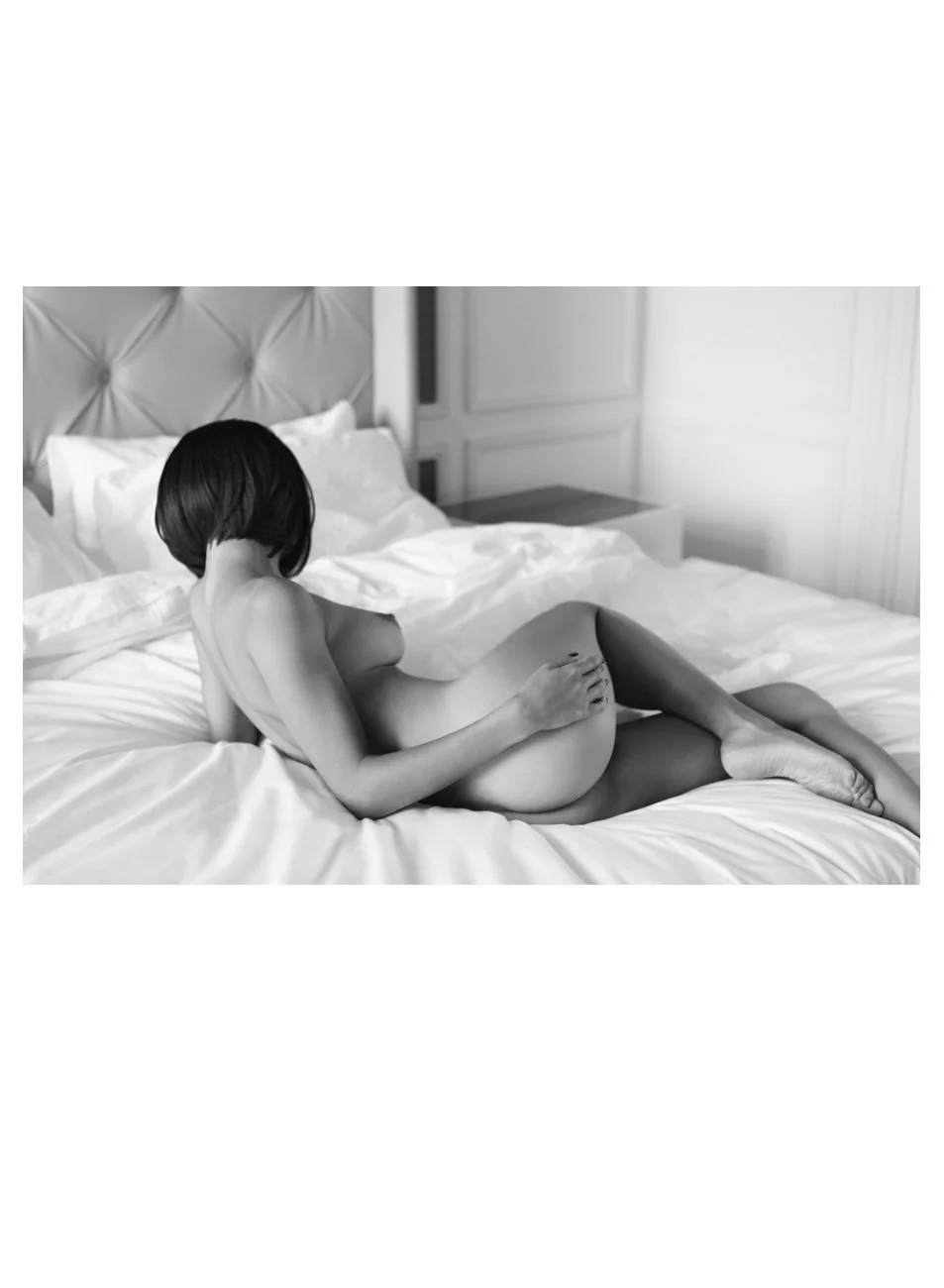
In "Mirror Love", photographed in an exclusive hotel suite in Paris, nude photographer and visual artist TINA TRUMPP explores the multifaceted relationship between self-perception and identity through her fine art photography. The scene depicts a female figure, nude from behind, lost in the sight of her own reflection—a quiet, intimate moment between reality and reflection.
In TINA TRUMPP’s work, erotic art becomes a medium for self-discovery. The body appears not as an object, but as a vessel of emotion and consciousness. The reflection opens up a second level of perception in which closeness and distance, the inner world and the external image merge—a central theme in contemporary fine art photography.
The interplay of space, light, and reflection lends the work a calm, almost meditative tension. As a nude photographer, TINA TRUMPP uses the aesthetics of nude art to explore questions of identity, self-image, and inner perception. “Mirror Love” thus becomes a poetic work within her erotic art—a quiet yet powerful image for collectors of sophisticated nude art and photographic art. Read the press article about this artwork at stern.de
Museum-quality archival prints in the following sizes, in black-and-white or color:
60 × 40 cm (23.62 × 15.75 inches), edition of 25 + 3 artist's proofs, price €6,000
80 × 54 cm (31.50 × 21.26 inches), edition of 15 + 2 artist's proofs, price €9,000
120 × 80 cm (47.24 × 31.50 inches), edition of 10 + 2 artist's proofs, price €13,000
180 × 120 cm (70.87 × 47.24 inches), edition of 5 + 2 artist's proofs, price €22,000
“Suite 12”, also known as “Suite Douce”, by TINA TRUMPP is an intimate fine-art print that captures a quiet moment of tranquility in an exclusive Parisian suite. The image depicts a nude woman resting on a bed in a black-and-white composition that emphasizes atmosphere, tonality, and emotional depth.
The setting—a Parisian suite—conveys a sense of elegance and privacy, where intimacy is not openly displayed but subtly hinted at. The title “Suite Douce”—which means “gentle suite” in English—reflects the emotional mood of the painting: a place of tranquility, self-reflection, and quiet presence.
A defining feature of TINA TRUMPP’s fine art photography is the balanced relationship between intimacy and restraint. The body becomes part of a larger atmosphere in which light, composition, and silence create a contemplative visual experience.
"Suite 12" represents contemporary nude art, in which simplicity and elegance blend to create a timeless expression of tranquility and beauty. Read the press article about this artwork at stern.de
1. Why Black-and-White Nude Photography Has a Unique Visual Language
The absence of color fundamentally changes the way a photographic subject is perceived. While color photographs are often characterized by different hues and moods, black-and-white photography focuses on the essentials: shapes, textures, contrasts, and composition.
This creates an extraordinary visual effect, especially in nude photography. The viewer’s attention is immediately drawn to the silhouette, the posture, and the subtle details of the skin. Even small changes in perspective or lighting can alter the overall impact of an image.
The art of black-and-white nude photography thrives on this deliberate simplification. It creates images that captivate not through decorative effects, but through their timeless aesthetic and emotional depth.
Each photograph tells its own story. It can come across as powerful and self-assured, reserved and poetic, or mysterious and sensual. It is precisely this complexity that makes black-and-white photographs a special form of fine art nude photography.
2. Light and Shadow as Design Elements
Light and shadow are the central creative elements of artistic nude photography. They sculpt the body, emphasize its contours, and lend a photograph a sense of depth.
Through the strategic use of lighting, individual parts of the body can be highlighted, while others are deliberately left in shadow. This creates striking contrasts and a three-dimensional visual effect reminiscent of classical sculptures or paintings.
The interplay of different lighting characteristics is particularly appealing:
Soft Light: Creates smooth transitions and a harmonious, natural atmosphere.
Directional light: Emphasizes body contours and creates a striking three-dimensional effect.
Low-key technique: Uses deep blacks and strategic highlights.
Shadow Play: Transforming light and darkness into creative elements in their own right.
In black-and-white nude photography, light becomes a key element of the image's message. It determines which emotions are conveyed and how the viewer perceives the human body.
The deliberate use of grayscale further enhances this effect. Light becomes form, shadow creates depth, and a photograph is transformed into a work of art in its own right.
3. The Significance of Body Shapes and Lines
The human body possesses a natural language of form that is particularly striking in black-and-white photography. Curved lines, harmonious proportions, and geometric structures form the basis of many expressive nude photographs.
A slightly turned shoulder, the curve of a hip, or the silhouette of a back can already create a fascinating visual composition. The point is not to show the body as completely as possible. Rather, carefully chosen details and perspectives can spark the viewer’s imagination.
In fine art nude photography, the body is often viewed as a sculpture. Light, perspective, and framing transform natural forms into abstract or almost graphic compositions.
The following are particularly exciting:
curved body lines and natural silhouettes
the interplay of symmetrical and asymmetrical forms
Abstract image details and minimalist compositions
the connection between the body and negative image space
harmonious transitions between light, skin, and shadow
This results in aesthetic nude portraits that go far beyond a classical depiction of the human body. They reveal the body’s natural beauty and artistic diversity.
4. Femininity and Self-Determination in Nude Photography
Artistic nude photography can express far more than just physical beauty. It offers women the opportunity to experience themselves and their bodies from a new perspective and to consciously showcase their own personalities.
The focus here is not on a predetermined ideal of beauty, but rather on each person’s individual charisma. Femininity can be powerful, sensual, vulnerable, self-assured, or reserved. These different facets are what make up the diversity of nude photography.
An important aspect is self-determination. The decision to be photographed nude or partially clothed is a personal one. It should always be based on voluntary participation, trust, and mutual respect.
In sophisticated fine-art nude photography, the female body is not reduced to its outward appearance. Rather, the focus is on personality, expression, and a self-determined portrayal.
Black-and-white photography supports this approach through its understated visual language. It draws the viewer's attention to posture, body language, and individual forms without distracting from the actual message of the image.
This allows for the creation of photographs that not only portray femininity in an aesthetic way, but also convey individuality and self-confidence.
Museum-quality archival print available in the following sizes:
60 × 45 cm (23.6 × 17.7 inches), edition of 25 + 3 artist's proofs, price €6,000
80 × 60 cm (31.5 × 23.6 inches), edition of 15 + 2 artist's proofs, price €9,000
120 × 90 cm (47.2 × 35.4 inches), edition of 10 + 2 artist's proofs, price €13,000
180 × 135 cm (70.9 × 53.1 inches), edition of 5 + 2 artist's proofs, price €22,000
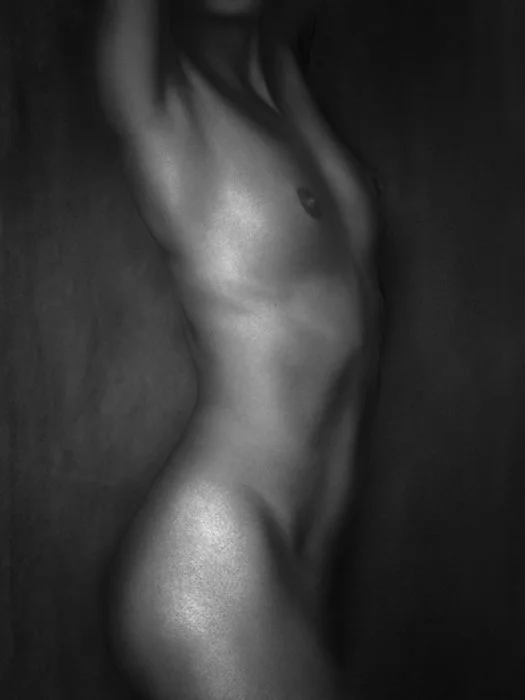
In Silver Nude, fine art nude photographer and photographic artist TINA TRUMPP focuses on the minimalist depiction of the human upper body within her fine art photography. Shot in black and white, this nude photography unfolds a timeless, clean aesthetic in which form, light, and surface take center stage.
The body appears with a silvery sheen, almost like a sculpture made of light. In TINA TRUMPP’s work, nude art becomes a study of materiality and perception—the skin appears at once soft and metallic, tangible and ethereal. As a fine art nude photographer, she succeeds in freeing the body from any narrative distractions and presenting it as pure form in photographic art. The interplay of light and shadow precisely sculpts the surface and lends the composition a calm, almost meditative presence.
"Silver Nude" is a minimalist yet powerful work in which TINA TRUMPP, as a fine art nude photographer and photographic artist, brings to light the essence of nude photography—an elegant fine art piece for collectors who appreciate the interplay of body, light, and form in its purest expression. Read the press articles about Tina Trumpp at stern.de
Museum-quality archival print available in the following sizes:
60 × 45 cm (edition of 25 + 3 artist's proofs), 6,000 euros
80 × 60 cm (edition of 15 + 2 artist's proofs), 9,000 euros
120 × 90 cm (edition of 10 + 2 artist's proofs), 13,000 euros
180 × 135 cm (edition of 5 + 2 artist’s proofs), 22,000 euros
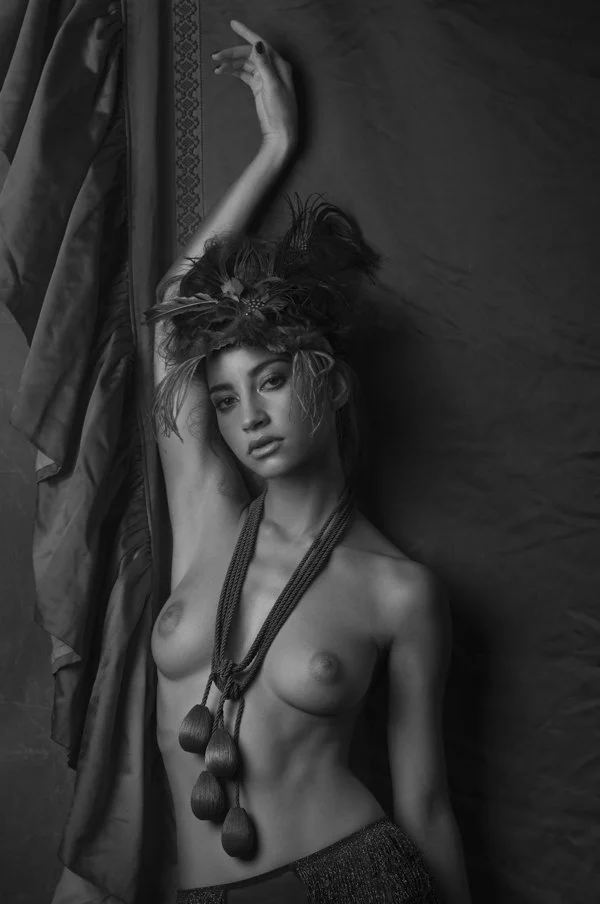
In "Moulin Rouge", TINA TRUMPP combines the aesthetics of black-and-white photography with the sensual expressiveness of contemporary nude photography. Created as part of a Leica S editorial, the work captures the iconic atmosphere of Paris—a blend of elegance, history, and subtle intimacy.
In TINA TRUMPP’s visual language, nude photography becomes a quiet interplay of light, shadow, and form. The body appears simplified and clear, embedded in the distinctive atmosphere of the location. The black-and-white aesthetic enhances the graphic quality of the composition and lends the scene a timeless depth.
The combination of Paris, nude photography, and the iconic image of the Moulin Rouge creates a visual tension between classic sensuality and modern fine art. For TINA TRUMPP, this results in a body of photographic work that does not merely document but interprets—a quiet, elegant moment suspended between the past and the present.
A sophisticated fine art collection for collectors that combines nude photography, location, and atmosphere in a clear, timeless visual language. The works have been successfully exhibited internationally at the Leica Galleries (Rome, Porto, Salzburg, and Stuttgart).
5. The Difference Between Artistic and Commercial Nude Photography
Not all nude photography pursues the same artistic intent. While commercial nude photography is often geared toward specific client requests, marketing goals, or visual trends, artistic nude photography focuses on the photographer’s personal vision.
The differences are most evident in the design and implementation.
Commercial nude photography is often guided by specific requirements. The images are intended to meet certain expectations, appeal to a target audience, or be used for advertising and presentation purposes. The composition and visual language are often based on a predetermined concept.
Artistic nude photography takes a freer approach. Here, the focus is on the photographer’s vision, the individual interpretation of the body, and the aesthetic impact of the finished image.
Typical characteristics of artistic nude photography include:
a distinctive and recognizable visual style
Deliberate use of light, shadow, and perspective
Creative and unique image compositions
the combination of aesthetics and emotional expression
a photographic interpretation rather than a purely documentary representation
Black-and-white nude photography is particularly well-suited to this artistic approach. By focusing on form, structure, and light, a visual language emerges that can stand the test of time, independent of commercial trends.
6. Black-and-White Photography as a Timeless Art Form
Part of the appeal of black-and-white photography lies in its independence from fashion trends. While colors and visual trends are constantly changing, the monochrome visual language possesses a special enduring quality.
The depiction of the human body has long played a significant role in classical photography and art history. For centuries, sculptors, painters, and photographers have explored proportions, movement, and the aesthetics of the human form.
Modern black-and-white nude photography draws on this tradition and reinterprets it. It combines classical compositions with contemporary perspectives and individual artistic concepts.
Such photographs also make a special impression when produced as high-quality fine art prints. On select papers, subtle gray gradations, deep blacks, and nuanced light structures are shown to their best advantage.
As limited-edition photographic art, selected works can become exclusive collector's items. They combine photographic quality with artistic merit and forge a lasting connection between photography and the visual arts.
Black-and-white photography is therefore more than just a technical variation in image composition. It is an art form in its own right with a distinctive aesthetic.
7. Limited-Edition Nude Photography by Tina Trumpp
Tina Trumpp’s black-and-white nude photography represents a unique artistic exploration of the beauty and expressiveness of the female body. Her work combines the aesthetics of fine art photography with a sensitive and distinctive visual language.
The focus is on the artistic portrayal of femininity. Through deliberate composition, a carefully chosen perspective, and the strategic use of light, the photographs take on a distinctive visual presence.
Black-and-white nude photography offers a timeless framework for interpreting the human body. Shapes and contours stand out more clearly, while the minimalist color palette draws attention to the composition of the image itself.
Selected works by Tina Trumpp are available as limited-edition fine-art photographs. The limited edition underscores the exclusive nature of these artworks and makes them attractive collector's items for connoisseurs of sophisticated photographic art.
Whether as a unique work of art for your own home or as part of a private photo collection, limited-edition nude photography combines aesthetic sophistication with a distinctive charm.
Anyone interested in high-quality black-and-white nude photography will discover in Tina Trumpp’s work a unique blend of artistic vision, timeless aesthetics, and fine art photography.
Here, the beauty of the human body is not understood as a fleeting moment, but as a subject that takes on a lasting artistic form through photography.