It is a fascinating interplay of light, nature, and time: Delicate leaves stand out against a deep blue background, filigree blossoms cast their distinctive silhouettes onto paper, and from a single moment of exposure, a work of art of timeless beauty is born.
Cyanotype is one of the most poetic historical photographic techniques. Also known as iron-blue printing, it combines the origins of analog photography with a unique artistic expressiveness. Its characteristic shades of blue, the delicate plant structures, and its distinctive aesthetic make it an extraordinary form of botanical photographic art.
But what makes this technique so special? How are those intense shades of blue produced, and why does cyanotype continue to hold such a fascination to this day?

These unique floral images are cyanotypes (iron-blue prints) depicting plants from Tina Trumpp’s own garden. Some motifs were carefully dried, while others were exposed directly to sunlight—a historical photographic process that lends the forms a poetic and timeless quality in deep shades of blue.
Motif dimensions: 18.8 × 13.8 × 0.2 cm
Framed with museum-quality glass and a mat: 34.6 × 27.6 × 3 cm
In the fall of 2024, Tina found two weak young hedgehogs that wouldn’t have survived the winter without help. Luna and Oskar weighed only about 280 grams. With a lot of patience and care, she nursed them back to health until they reached about 900 grams, at which point they were released back into the wild in May—in Tina’s own garden:
While the two hedgehogs were hibernating, Tina transformed her garden into a little natural paradise. The lawn gave way to hardy, native perennials that can withstand even the summer heat. Today, six to eight hedgehogs live there, including Luna and Oskar, who return every evening. At the same time, numerous butterflies have returned, turning this place into a vibrant, diverse habitat.
These images of flowers thus convey not only an aesthetic story, but also a personal one that is closely connected to nature.
Learn more about the historic cyanotype process in this blog post.
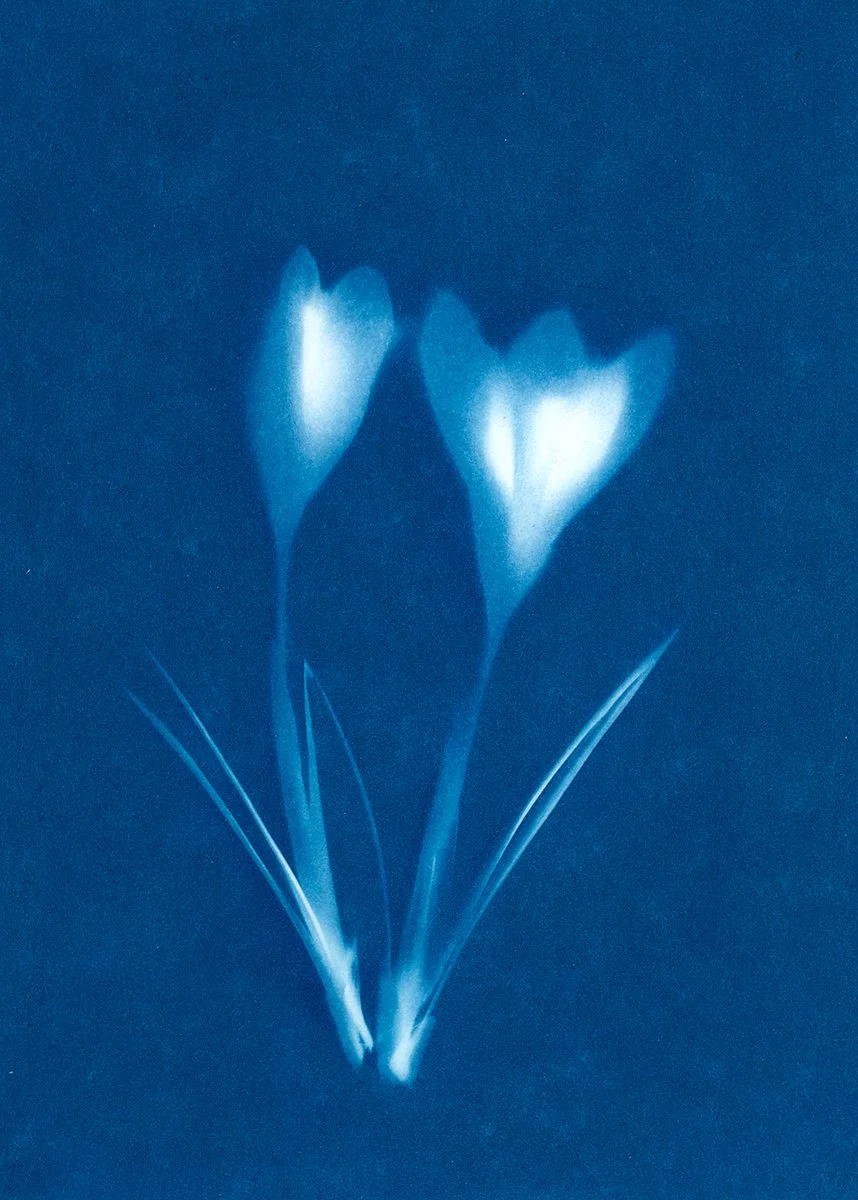
These unique floral images are cyanotypes (iron-blue prints) depicting plants from Tina Trumpp’s own garden. Some motifs were carefully dried, while others were exposed directly to sunlight—a historical photographic process that lends the forms a poetic and timeless quality in deep shades of blue.
Motif dimensions: 18.8 × 13.8 × 0.2 cm
Framed with museum-quality glass and a mat: 34.6 × 27.6 × 3 cm
In the fall of 2024, Tina found two weak young hedgehogs that wouldn’t have survived the winter without help. Luna and Oskar weighed only about 280 grams. With a lot of patience and care, she nursed them back to health until they reached about 900 grams, at which point they were released back into the wild in May—in Tina’s own garden:
While the two hedgehogs were hibernating, Tina transformed her garden into a little natural paradise. The lawn gave way to hardy, native perennials that can withstand even the summer heat. Today, six to eight hedgehogs live there, including Luna and Oskar, who return every evening. At the same time, numerous butterflies have returned, turning this place into a vibrant, diverse habitat.
These images of flowers thus convey not only an aesthetic story, but also a personal one that is closely connected to nature.
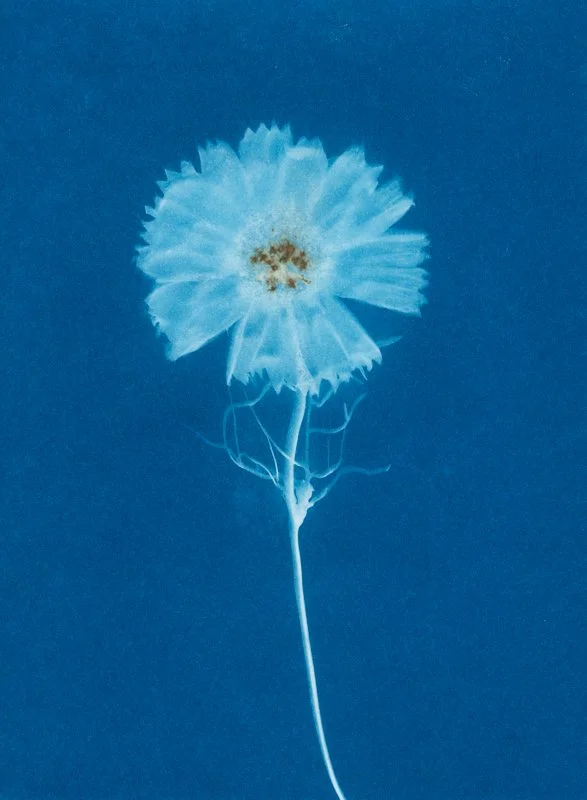
These unique floral images are cyanotypes (iron-blue prints) depicting plants from Tina Trumpp’s own garden. Some of the subjects were carefully dried, while others were exposed directly to sunlight—a historical photographic process that lends the forms a poetic and timeless quality in deep shades of blue.
Image size: 18.8 × 13.8 × 0.2 cm
Framed with museum-grade glass and a mat: 34.6 × 27.6 × 3 cm
In the fall of 2024, Tina found two weakened young hedgehogs that would not have survived the winter without help. Luna and Oskar weighed only about 280 grams. With a lot of patience and care, she nursed them back to health until they reached about 900 grams, at which point they were released back into the wild in May—in Tina’s own garden:
While the two hedgehogs were hibernating, Tina transformed her garden into a little natural paradise. The lawn gave way to hardy, native perennials that can withstand even the summer heat. Today, six to eight hedgehogs live there, including Luna and Oskar, who return every evening. At the same time, numerous butterflies have returned, turning this place into a vibrant, diverse habitat.
These images of flowers thus convey not only an aesthetic story, but also a personal one that is closely connected to nature.
Learn more about the historic cyanotype process in this blog post.
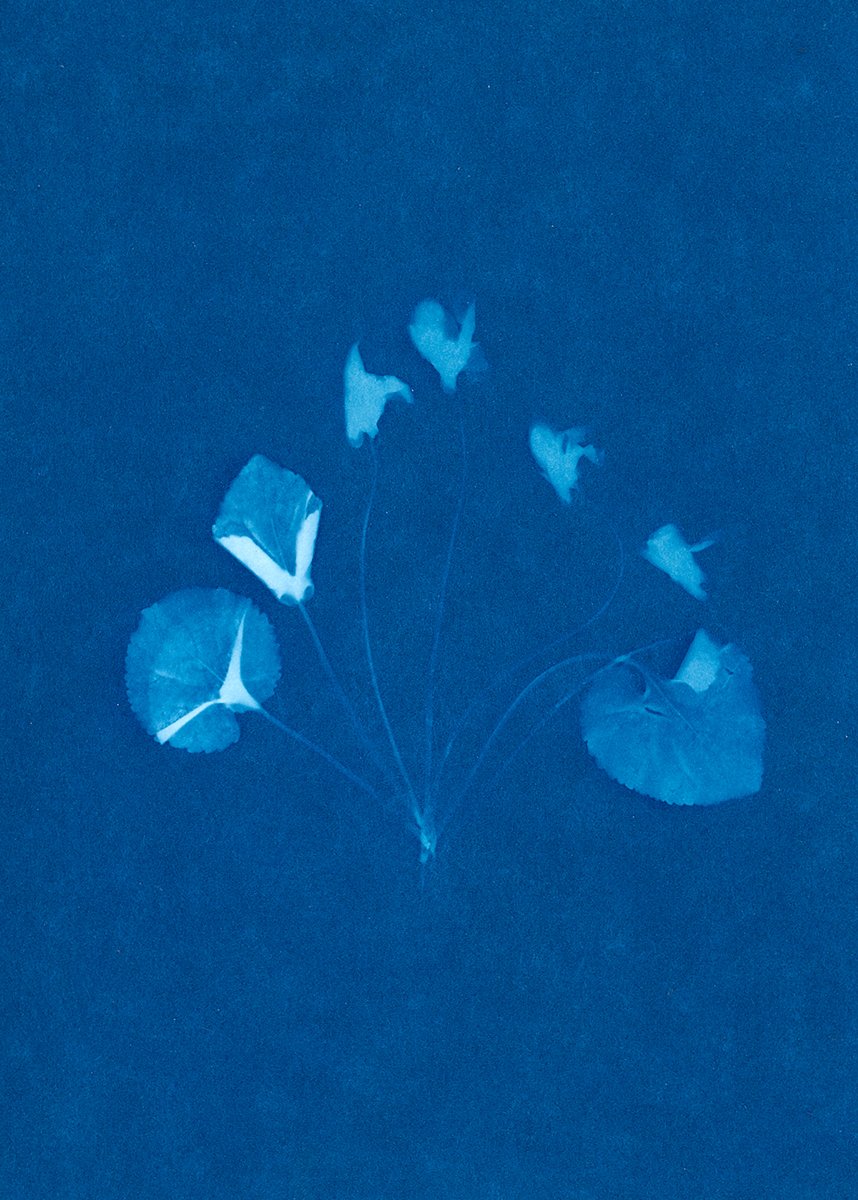
These unique floral images are cyanotypes (iron-blue prints) depicting plants from Tina Trumpp’s own garden. Some motifs were carefully dried, while others were exposed directly to sunlight—a historical photographic process that lends the forms a poetic and timeless quality in deep shades of blue.
Motif dimensions: 18.8 × 13.8 × 0.2 cm
Framed with museum-quality glass and a mat: 34.6 × 27.6 × 3 cm
In the fall of 2024, Tina found two weak young hedgehogs that wouldn’t have survived the winter without help. Luna and Oskar weighed only about 280 grams. With a lot of patience and care, she nursed them back to health until they reached about 900 grams, at which point they were released back into the wild in May—in Tina’s own garden:
While the two hedgehogs were hibernating, Tina transformed her garden into a little natural paradise. The lawn gave way to hardy, native perennials that can withstand even the summer heat. Today, six to eight hedgehogs live there, including Luna and Oskar, who return every evening. At the same time, numerous butterflies have returned, turning this place into a vibrant, diverse habitat.
These images of flowers thus convey not only an aesthetic story, but also a personal one that is closely connected to nature.
1. What is cyanotype?
Cyanotype is a historical fine-art photographic printing process in which light-sensitive iron salts are used to produce images in characteristic shades of blue. Because of its distinctive coloration, it is also known as an iron-blue print.
Unlike traditional photography, cyanotype does not require a camera or a digital image sensor. The subjects are placed directly onto a light-sensitive coated substrate or transferred to the paper using transparent negatives.
One particularly appealing aspect is the ability to use natural materials such as leaves, flowers, grasses, and twigs directly as templates. Their textures and shapes create fascinating images during the exposure process.
This results in a unique form of cyanotype art that lies at the intersection of photography, graphic art, and free artistic expression.
2. The History of Iron Blue Printing
The history of cyanotype dates back to 1842. The process was developed by the English scientist and astronomer Sir John Herschel. He discovered that certain iron salts develop an intense blue color when exposed to UV light.
The British botanist Anna Atkins played a particularly significant role in the history of cyanotype. She recognized early on the potential of the process for depicting botanical structures and, beginning in 1843, published her work *Photographs of British Algae: Cyanotype Impressions*.
Her works are considered milestones in the history of photography. Atkins used cyanotype to capture algae and other plants in their natural form on paper. The result was a series of plant portraits that were both exceptionally precise and aesthetically pleasing.
What began as scientific documentation evolved over time into a distinct form of artistic expression.
Today, iron-blue printing is enjoying a resurgence in popularity. Artists are rediscovering the possibilities of this historic technique and combining traditional methods with contemporary visual concepts.
3. How is a cyanotype made?
The creation of a cyanotype is a fascinating process in which chemistry, light, and craftsmanship all come together.
First, the paper is coated with a light-sensitive solution consisting of two iron salts. Once dry, the material can be decorated with various designs.
In botanical cyanotypes, for example, leaves, flowers, or grasses are placed directly on the paper. The paper is then exposed to UV light or sunlight.
During this process, the light-sensitive iron salts react with one another. The characteristic blue color of the image develops in the areas exposed to light. The areas covered by plants remain lighter at first.
After exposure, the paper is thoroughly rinsed with water. Only then does the final image become visible, and the characteristic blue hues emerge.
Part of the appeal lies in the fact that the result can never be fully predicted. Exposure time, light intensity, humidity, paper texture, and the structure of the plants used all influence the final image.
Each cyanotype is therefore a unique result of this interplay.
4. Why do the characteristic shades of blue occur?
The intense blue is the distinctive hallmark of the cyanotype. This is the result of a chemical reaction in which, when exposed to UV light, the poorly soluble dye Prussian blue is formed.
This deep blue dye gives iron-blue prints their distinctive brilliance and depth.
Depending on the lighting conditions, paper, and development process, a variety of shades can result—ranging from a delicate sky blue to a rich medium blue to an indigo that is almost as dark as night.
The quality of the paper also plays an important role. Its surface, absorbency, and texture influence how the photosensitive coating spreads and how the color will appear later.
It is precisely these subtle differences that give cyanotype art its unique character. The shades of blue never appear completely uniform or artificial. They possess a depth and vibrancy that make each piece a one-of-a-kind original.
5. Botanical Cyanotype—Plants as Artistic Motifs
Nature offers an almost inexhaustible variety of shapes, structures, and silhouettes. That is precisely what makes botanical cyanotype so fascinating.
Leaves, flowers, ferns, grasses, and delicate twigs become direct subjects for her artwork. Their natural forms and delicate textures create a fascinating contrast to the intense blue of the paper.
Particularly captivating are the delicate leaf veins, the translucency of individual petals, and the varied contours of the plants. What often goes unnoticed in everyday life is brought to light through iron-blue printing and highlighted in all its beauty.
The plants are not merely depicted. They themselves become a design element and play a decisive role in shaping the composition of the artwork.
This is how botanical photographic art is created, combining the observation of nature with artistic interpretation.
Cyanotype not only captures the outward form of a plant, but also conveys something of its fragility and transience. Each print is a snapshot that preserves a natural structure in a unique way.
6. The Unique Characteristics of Handmade Cyanotypes
In an increasingly digital world, handmade works of art hold a very special value. They are not created on a screen, but through a direct, often experimental process in which materials, light, and craftsmanship play a crucial role.
In cyanotype photography, too, no two works are exactly alike. Even the slightest variations during coating, exposure, or development can affect the result.
The intensity of the blue, the sharpness of the plants' outlines, and the subtle transitions between light and shadow give each sheet of paper its own unique character.
These minor irregularities are not flaws, but rather an integral part of the aesthetic.
Anyone looking to purchase original cyanotypes is therefore choosing more than just a decorative image. It is a one-of-a-kind, handcrafted piece that reflects a unique creative process and showcases the beauty of traditional analog techniques.
7. Cyanotype: The Tension Between Photography and Painting
Cyanotype holds a special place within the visual arts. It combines the technical fundamentals of photography with the creative freedom of painting.
On the one hand, the images are created through a photochemical process and thus belong to the category of historical photographic printing processes. On the other hand, the free arrangement of the motifs, the choice of materials, and the individual execution open up numerous artistic possibilities.
Unlike in traditional analog photography, the focus is not necessarily on reproducing a subject as faithfully as possible. Rather, it is about interpreting shapes, textures, and compositions.
By carefully arranging plants and playing with light and shadow, one can create scenes that have an almost painterly effect.
Cyanotype thus straddles the line between documentary photography and fine art. It is precisely this combination that makes it so timeless and versatile.
8. Tina Trumpp's One-of-a-Kind Botanical Creations
In my work, I explore the unique aesthetics of cyanotype and the diverse expressive possibilities of botanical motifs.
I am particularly fascinated by the interplay of nature, light, and the distinctive blue of iron-blue printing. The delicate textures of individual plants, their natural forms, and their often surprising graphic effect form the foundation of my artistic work.
My goal is not simply to depict plants. Rather, I want to reveal their unique beauty and give them space within a minimalist, timeless visual language.
Each cyanotype is created through a meticulous, artisanal process. The selection and arrangement of the plants, the coating of the paper, and the exposure all influence the final result. In this way, each work develops its own unique character.
My botanical cyanotypes are originals, not prints that can be reproduced at will. They combine the aesthetics of a historical photographic technique with a contemporary, nature-inspired visual language.
Whether as a single work of art or as part of a small collection—the deep shades of blue and the delicate botanical illustrations bring a special sense of calm and natural beauty to any room.
Anyone who is passionate about extraordinary botanical photographic art will find in my cyanotypes unique works of art that capture the beauty of nature in a way all their own.
Cyanotype Art – The Timeless Poetry of Light
Cyanotype is much more than a historical photographic technique. It is a unique blend of science, craftsmanship, and artistic expression.
Their distinctive shades of blue, the delicate plant-like structures, and the unpredictability of the creative process make each piece unique.
Perhaps that is precisely where her special magic lies: light, water, and natural forms come together to create images that invite us to take a closer look and rediscover the beauty of the little things.
A poetic art form that bridges the past and the present—and gives nature a very special place on paper.