Art is much more than just a decorative addition to one’s home. It tells stories, evokes emotions, offers new perspectives, and reflects the personality of its owner. Building your own art collection, therefore, means consciously engaging with aesthetics, creativity, and personal preferences.
Getting started doesn't have to be complicated or expensive. Whether it's expressive photographic art, contemporary painting, or select original artworks: even with just a few carefully chosen pieces, you can build a personal collection that will grow and gain significance over the years.
But what should beginners look out for? How can you recognize high-quality works of art? And what role do limited editions, provenance, and certificates of authenticity play?
In this guide, you'll learn how to build your own art collection step by step and find works of art that are not only visually appealing but also hold personal value.
1. Why People Collect Art
The reasons why people collect art are as individual as the artworks themselves. For some, the emotional connection to a particular subject or artist is the main focus. Others are interested in developments in art history, specific techniques, or the aesthetic impact of a work.
An art collection can serve various purposes:
Personal Expression: Art reflects one's own taste, personality, and individual life experiences.
Emotional significance: A work of art can evoke memories, inspire, or create a special atmosphere.
Aesthetic Value: High-quality art adds character to spaces and creates unique focal points.
Cultural Interest: Collecting art allows for an in-depth exploration of artists, historical periods, and forms of creative expression.
Long-term perspective: Certain works of art may gain cultural or economic significance over time.
Especially when it comes to art collecting for beginners, it’s a good idea to first reflect on your personal motivation. Do you want to decorate your living spaces with unique works of art? Are you interested in a particular art movement? Or would you like to follow the development of individual artists?
It is important not to build a collection solely with an eye toward potential appreciation in value. Above all, art should inspire. A collection that remains interesting over the long term often stems from a genuine passion and a distinct personal style.
2. How do you find the right works of art?
Anyone looking to build an art collection is initially faced with a wide range of choices. Contemporary art, photography, painting, abstract works, or classical motifs—the possibilities are virtually endless.
The most important starting point, therefore, is your own taste.
Take the time to get to know different artists and artistic styles. Visit galleries, exhibitions, and art events. Online galleries and artists' websites are also a great way to discover new artists.
What should you look for when making your selection?
1. A personal connection to the artwork
A work of art should still speak to you even after a long time. Ask yourself what emotions it evokes and whether you can imagine having it in your living space for the long term.
2. Quality and Artistic Style
Pay attention to the craftsmanship, the materials used, and the originality of the artwork. A recognizable artistic style can be an important hallmark of an artist.
3. Information About the Artist
Learn about the artist’s career, past exhibitions, working methods, and areas of focus. The better you understand the context behind a work, the more informed your purchasing decision will be.
4. Authentic Sources
One particularly wonderful option is to purchase artwork directly from the artist. This often gives you direct insight into the creative process and allows you to learn more about how a piece was created.
5. Gradually develop your own style
You don't have to follow a strict collecting strategy right from the start. Over time, certain themes, colors, motifs, or artistic approaches may begin to emerge.
Here's a good tip for aspiring art collectors: It's better to buy a piece that truly inspires you than several works of art that merely fit a supposed trend.
3. Photographic art, painting, or original art?
One of the first decisions you’ll make when building an art collection concerns the art form. Photographic art, painting, and original artworks, in particular, offer different ways to express yourself artistically and build a collection.
Collecting Photographic Art
Photography has long since established itself as a distinct and recognized art form. Artistic photography combines technical precision with creative vision and opens up a wide range of possibilities for image composition.
The spectrum of contemporary photographic art ranges from expressive portraits to staged visual worlds and abstract compositions.
Anyone interested in collecting photographic art will appreciate the wide variety of styles available. Photographic works can be minimalist, emotional, experimental, or narrative.
Signed and limited-edition photographs are particularly interesting. They combine the unique aesthetic of photography with a fixed print run and a traceable provenance.
Collecting Paintings
Painting is one of the classic forms of art collecting. Whether abstract, figurative, expressive, or representational—paintings are distinguished by their unique materiality and the artist’s distinctive style.
Original canvas works are one-of-a-kind pieces and are therefore particularly exclusive. Brushstrokes, the application of paint, and the surface texture make each work unique.
Buy Original Art
Original art encompasses unique artistic works created using a variety of techniques and media. These include, for example, paintings, drawings, sculptures, and individual photographic works.
Buying original art means acquiring a work that is unique in its specific execution.
For beginners, it can be helpful to combine different art forms. A collection doesn't have to consist exclusively of paintings or photographs. It is precisely the interplay of different media that can create an exciting and unique effect.
What matters most is that the individual works share a personal connection with one another and, together, form a cohesive collection.
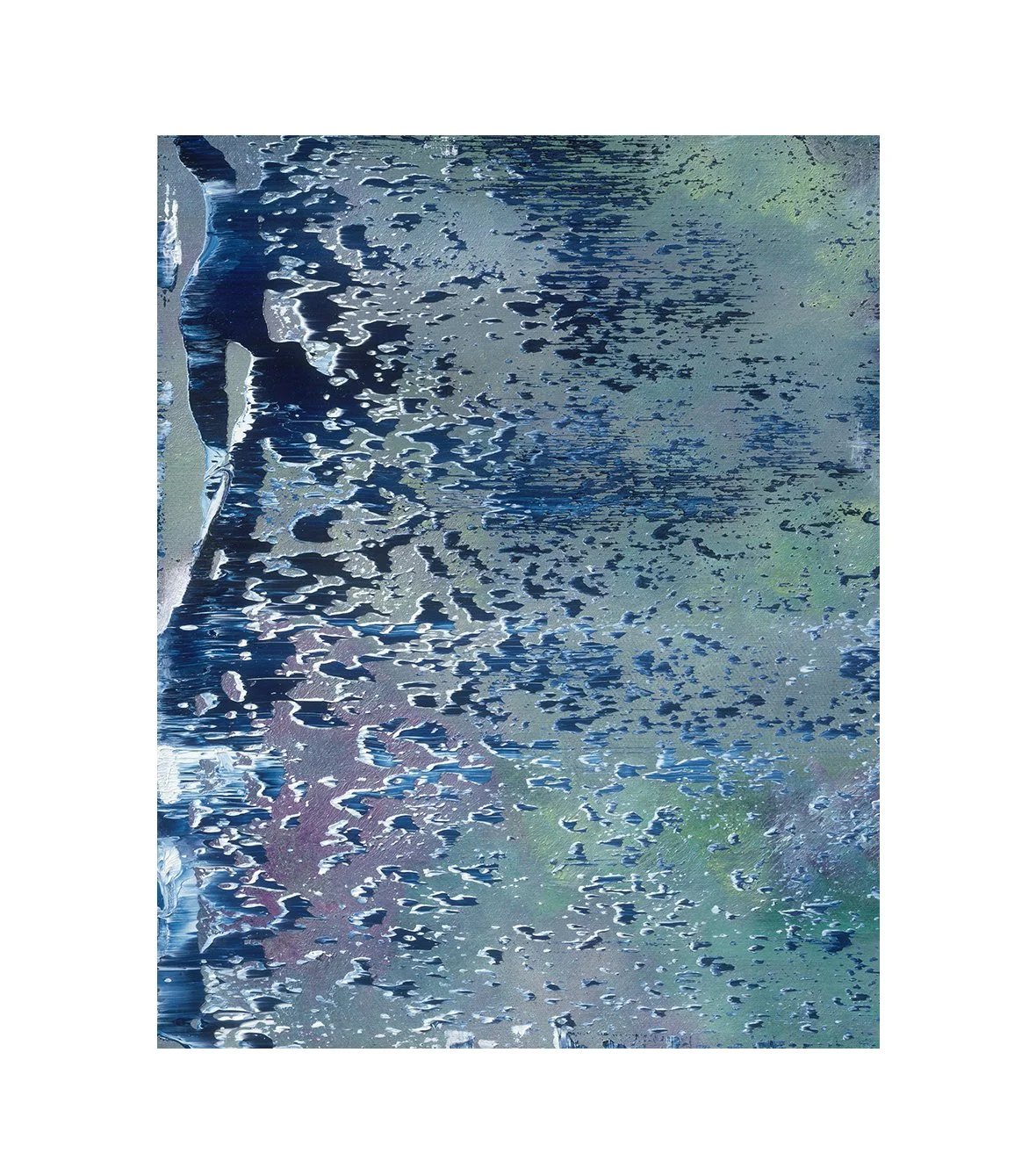
Oil on canvas, one-of-a-kind
36.8 x 29.2 x 0.3 cm
“Green I” opens the series with a particularly striking color composition: an intense blue gradient, emphasized on the left, meets multi-layered shades of green, creating a powerful visual tension. The squeegee technique lends the work a lively texture in which the layers of paint overlap, break apart, and merge into one another in fluid transitions.
The dominant blue on the left side of the painting appears cool and profound, while the adjacent shades of green create an organic, almost landscape-like impression. This interplay of cool clarity and natural warmth lends the painting a special dynamism and depth.
Like all works in the series, “Green I” is painted on canvas and mounted to a high standard: an elegant gray wooden frame and anti-reflective museum-grade glass protect the artwork and stylishly highlight its color effects.
As part of a three-part series, “Green I” serves as a powerful opening. Together with “Green II” and “Green III,” it creates a harmonious whole—yet the work also stands on its own as a uniquely expressive piece.
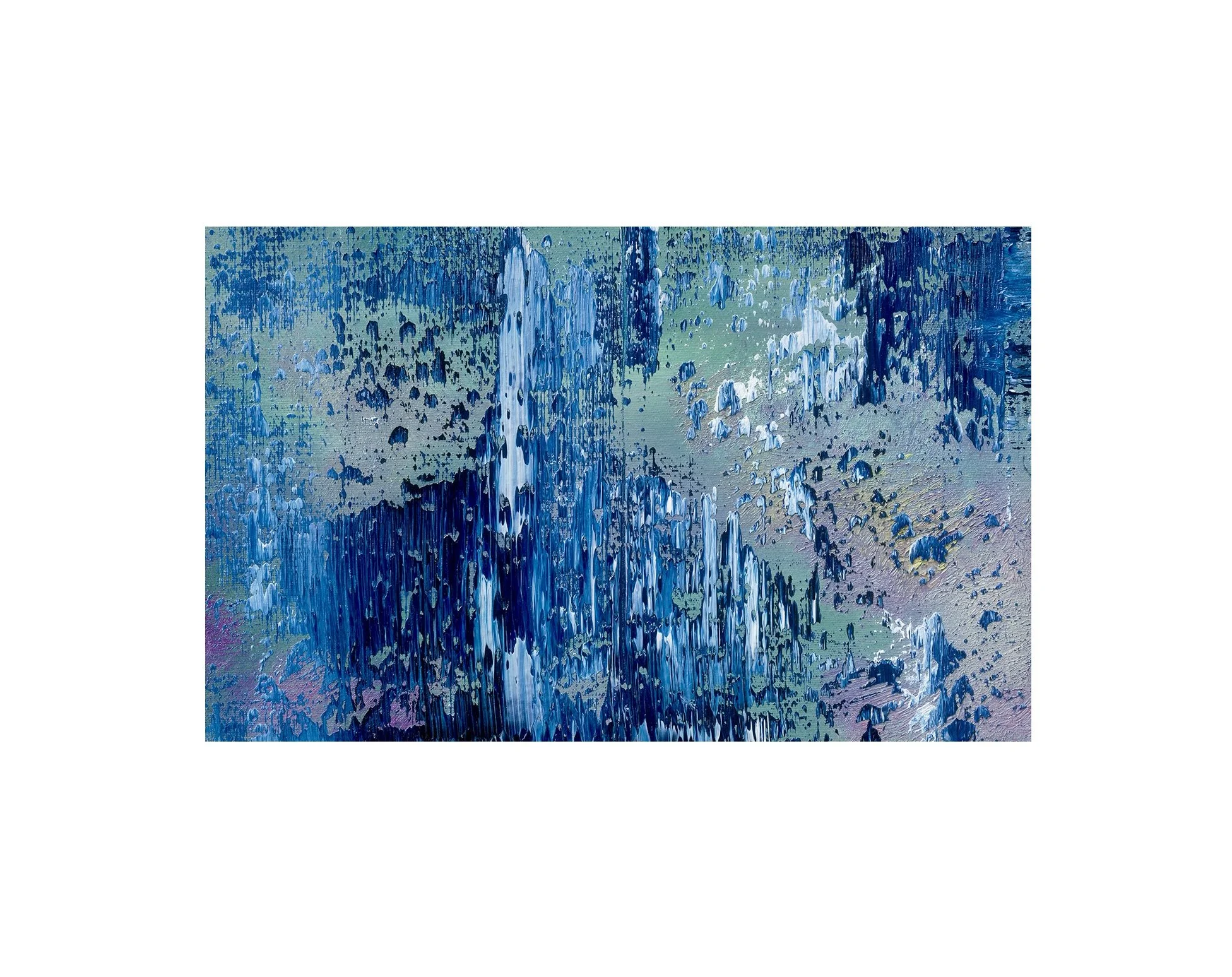
Oil on canvas, one-of-a-kind
17.3 x 27.7 x 0.3 cm
“Green II” is a unique oil painting created using the squeegee technique, which captivates with its multi-layered surface texture. This distinctive technique lends the work an intriguing depth, as layers of paint overlap, reveal underlying layers, and blend together in subtle transitions.
The focus is on nuanced shades of blue and green that range from gentle naturalness to powerful expressiveness. Subtle contrasts and rhythmic movements create a lively visual effect that radiates both calm and energy, lending the room a special atmosphere.
The work is painted on canvas and framed with great care: a modern, gray wooden frame, combined with high-quality museum-grade glass, protects the painting and perfectly highlights its rich colors.
“Green II” is part of a series of three works. Together, they form a harmonious ensemble that can be perfectly combined—yet each individual work stands on its own as a compelling, expressive work of art.
4. Limited Editions and Their Significance
Limited-edition artworks are an attractive way to collect high-quality art. Unlike a one-of-a-kind piece, a specific motif or artwork is produced in a predetermined number of copies.
Limited editions are particularly common in photographic art. For example, a photographic image may be produced in a run of ten, twenty, or thirty copies.
Limiting the print run creates transparency and makes the edition easier for collectors to track.
What are the benefits of limited-edition art?
Limited quantity: The number of available copies is set from the outset.
Documented print run: Collectors can determine how many copies of a particular design exist.
Access to high-quality art: Limited editions often provide a gateway to collecting works by renowned or emerging artists.
Collectible Value: A signature, edition number, and certificate of authenticity can attest to a work's uniqueness.
It is important to distinguish between a limited edition and a one-of-a-kind piece. A limited-edition photograph is not automatically an original in the sense of a unique, one-of-a-kind piece. Rather, it is an authorized work of art within a defined print run.
When making a purchase, you should therefore pay attention to the edition size, the numbering, the signature, and the production details.
Print quality also plays a crucial role. High-quality materials and professional printing processes contribute significantly to the visual impact and long-term durability of the print.
Limited-edition artworks can therefore serve as an interesting starting point if you want to build your art collection and discover different artistic perspectives.
5. Understanding Provenance and Certificates of Authenticity
Anyone who collects art should consider not only the aesthetics of a work, but also its provenance and authenticity.
Two important terms in this context are provenance and certificate of authenticity.
What does "provenance" mean?
Provenance describes the origin and history of ownership of a work of art. It documents where a work comes from and the various stages it has gone through over time.
Depending on the artwork, these may include:
Information about the artist and the year of creation
Information about the gallery or retail location
Previous Owners and Collections
Exhibition History
Publications and Art-Historical Documentation
A verifiable provenance builds trust and can be particularly important when it comes to higher-priced works of art.
Why is a certificate of authenticity important?
A certificate of authenticity confirms the authenticity of a work of art and attributes it to the respective artist. It may also contain important information about the work.
The following information is particularly relevant for photographic art and limited editions:
Artist's Name
Title of the artwork
Year of Creation
Edition number and total print run
Format and, if applicable, printing method
Artist's signature
Date and issuing authority of the certificate
A certificate of authenticity is especially useful when you purchase artwork directly from the artist or through a gallery.
It provides an important basis for documenting your collection and also makes it easier to identify individual works later on.
Tip: Keep certificates, invoices, and any additional information about each artwork in a safe place. Over time, this will help you build a personal collection archive.
6. How do you properly store works of art?
A high-quality art collection deserves careful maintenance. Even artistically outstanding works can suffer long-term damage due to unfavorable environmental conditions.
How you should properly store your artwork depends primarily on the materials used and the specific technique.
Sun Protection
Direct sunlight should always be avoided. UV radiation can alter colors and materials and cause visible damage.
For photographs, prints, and works on paper, it is recommended to take special care to protect them from light.
Temperature and Humidity
Significant fluctuations in temperature and humidity can put a strain on sensitive materials. Therefore, maintaining as stable an indoor climate as possible is beneficial.
In particular, avoid placing the device in close proximity to radiators, fireplaces, or damp exterior walls.
Framing and Glazing
For photographic works and paper art, professional framing is recommended. High-quality mats and UV-protective glass can provide additional protection.
The materials used should also be suitable for long-term storage.
Proper Storage
Not every work of art needs to be on permanent display. If you store works temporarily, they should be kept clean, dry, and protected.
For photographs and works on paper, for example, suitable archival materials and acid-free storage solutions are recommended.
Documentation
Create an overview of your collection that includes images, purchase receipts, certificates, and details about each work of art. This documentation will help you keep track of your collection and record its history.
Proper care not only protects the physical quality of your works of art, but also preserves their special significance for the future.
7. Individual albums or curated box sets?
Anyone looking to build an art collection has several options. While some collectors deliberately select individual works, curated collector's boxes offer an interesting alternative.
Select specific works
Purchasing individual works of art allows you to curate a very personalized collection.
You can search specifically for certain subjects, formats, or artists and expand your collection step by step.
This approach is particularly well-suited for people who already have a clear idea of their personal taste in art.
Discover Curated Collector's Boxes
A curated collector's box offers a different way to experience art. Instead of choosing a single work, collectors receive a collection of selected pieces that follow a specific artistic concept.
Depending on the layout, the publication may include several photographs, editions, or additional information about the artists.
The advantages lie, in particular, in the curatorial selection:
A cohesive overall concept: The works included are deliberately related to one another artistically.
New Perspectives: Collectors discover different themes and facets of an artist's work.
A unique way to get started: Collector's boxes can provide an easy introduction to the world of limited-edition art.
Consistent Presentation: Multiple works can be viewed and presented as a cohesive collection.
Curated collector's boxes can be an exciting way—especially for beginners—to familiarize themselves with photographic art and limited editions.
In this context, it is also important to consider the quality of the work, the print run, the origin, and the certificates included.
Whether it's a single piece or a collector's box set: what matters most is that your selection aligns with your personal understanding of art.
8. Create a Personal Collection with Tina Trumpp
An art collection becomes particularly interesting when it develops its own distinctive style. It reveals something about the person who selects the works and creates a connection between art, aesthetics, and personality.
Photographic artist Tina Trumpp offers a unique perspective on the world of artistic photography. Her work is characterized by an expressive visual language and a sensitive exploration of the human body, femininity, and aesthetics.
Her photographic worlds combine artistic staging with a unique atmosphere. This results in works that go far beyond traditional portrait photography.
For people interested in collecting photographic art, Tina Trumpp’s work offers the opportunity to build a personal collection with a clearly recognizable artistic style.
Limited-edition art prints are particularly interesting in this context. They allow you to acquire selected photographic works as part of your own collection.
Whether as a single statement piece, as an addition to an existing collection, or as an introduction to the world of high-quality photographic art, Tina Trumpp’s works can be a special addition to any personal art collection.
Anyone interested in her visual language can explore her various works and discover which motifs and compositions best reflect their own conception of art.
After all, collecting art means not only owning works of art, but also developing a personal connection with them.
Conclusion: An art collection begins with a personal decision
A high-quality art collection isn't built overnight. It evolves with every deliberate purchase, every new artistic discovery, and every personal experience.
When it comes to art collecting for beginners, one thing is certain: you don’t need extensive expertise or a large budget to get started. What’s much more important is an open mind, a genuine interest, and a willingness to engage with art.
Whether it's photographic art, painting, original artworks, or limited-edition art—this diversity offers countless opportunities to develop your own collecting style.
Look for quality, authenticity, and a traceable provenance. Learn about the artists and editions, and choose works that truly inspire you.
Step by step, you’ll build a personal art collection that not only enriches your living spaces but also tells your unique story.
Discover the world of photographic art by Tina Trumpp and find works of art that will enrich your personal collection.