The Garden: Species Conservation and a Work of Art
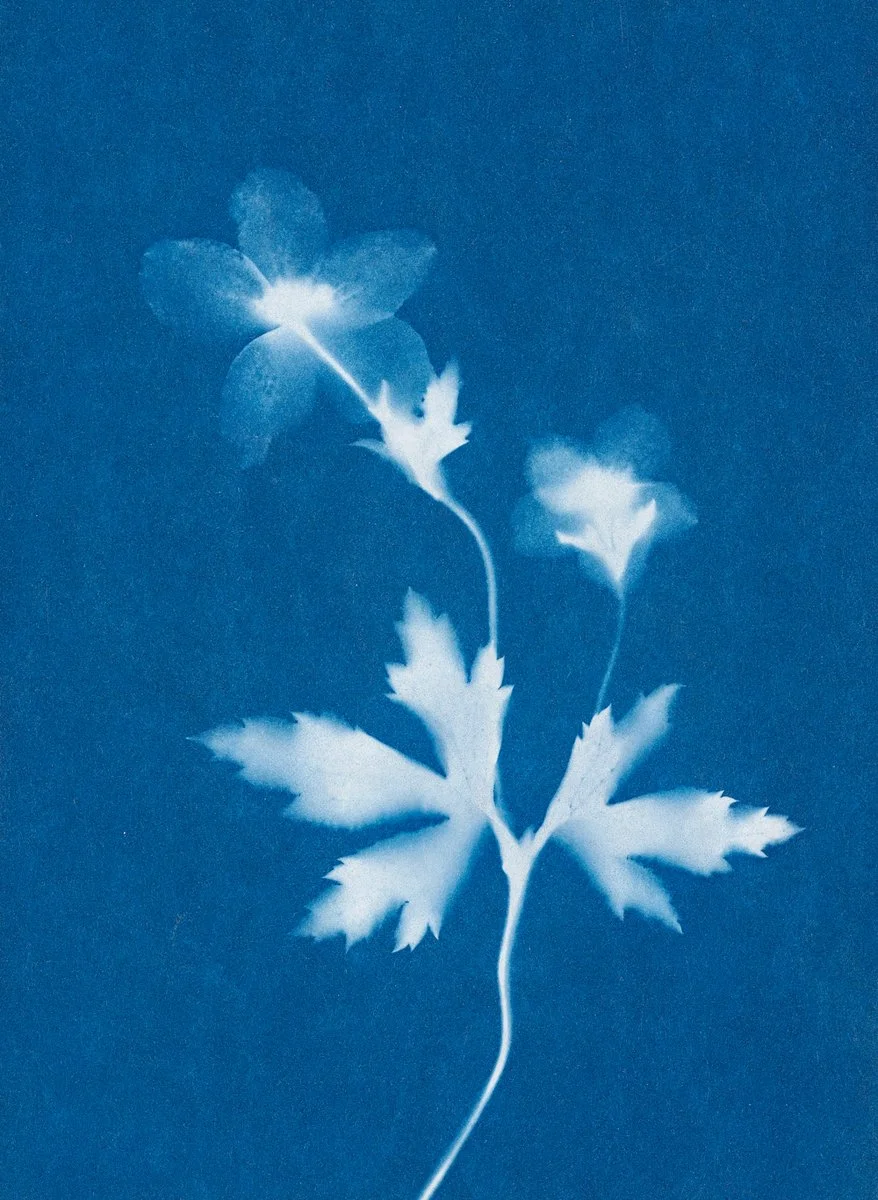
These unique floral images are cyanotypes (iron-blue prints) depicting plants from Tina Trumpp’s own garden. Some motifs were carefully dried, while others were exposed directly to sunlight—a historical photographic process that lends the forms a poetic and timeless quality in deep shades of blue.
Motif dimensions: 18.8 × 13.8 × 0.2 cm
Framed with museum-quality glass and a mat: 34.6 × 27.6 × 3 cm
In the fall of 2024, Tina found two weak young hedgehogs that wouldn’t have survived the winter without help. Luna and Oskar weighed only about 280 grams. With a lot of patience and care, she nursed them back to health until they reached about 900 grams, at which point they were released back into the wild in May—in Tina’s own garden:
While the two hedgehogs were hibernating, Tina transformed her garden into a little natural paradise. The lawn gave way to hardy, native perennials that can withstand even the summer heat. Today, six to eight hedgehogs live there, including Luna and Oskar, who return every evening. At the same time, numerous butterflies have returned, turning this place into a vibrant, diverse habitat.
These images of flowers thus convey not only an aesthetic story, but also a personal one that is closely connected to nature.
Learn more about the historic cyanotype process in this blog post.
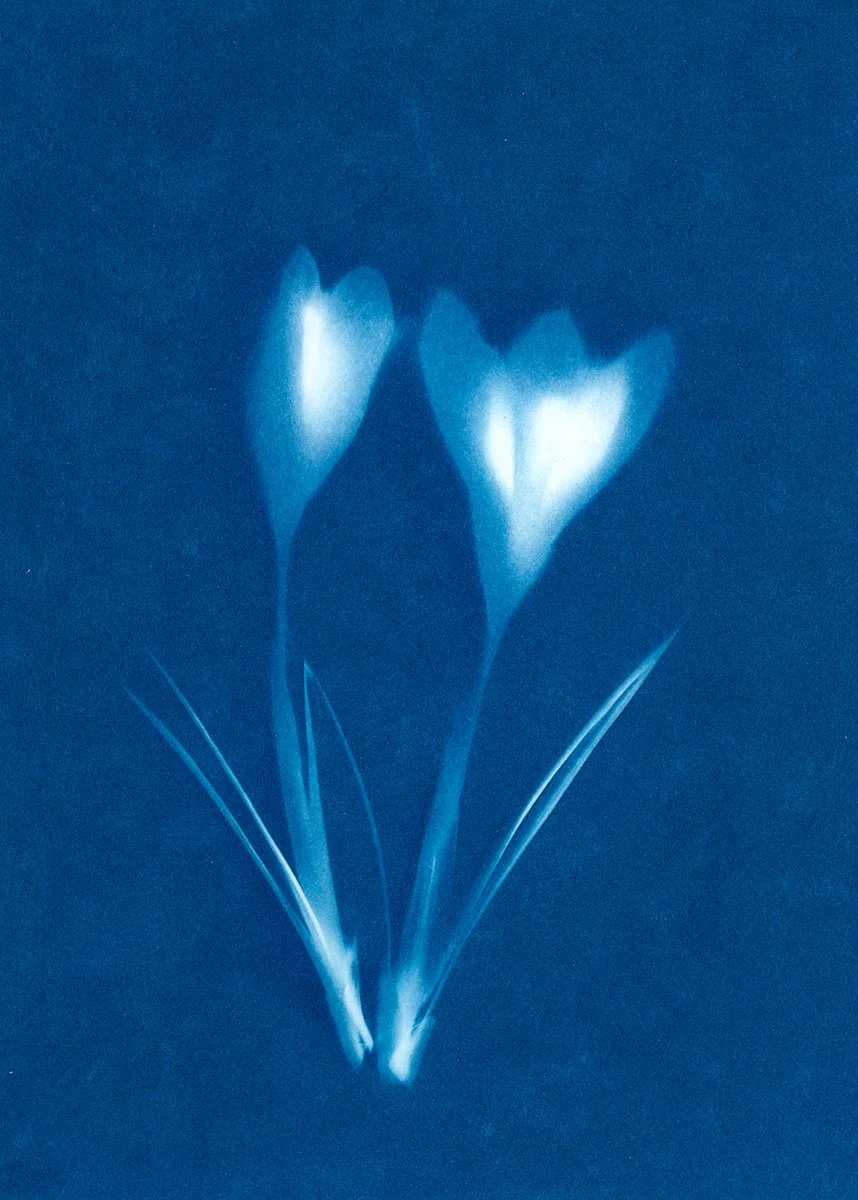
These unique floral images are cyanotypes (iron-blue prints) depicting plants from Tina Trumpp’s own garden. Some motifs were carefully dried, while others were exposed directly to sunlight—a historical photographic process that lends the forms a poetic and timeless quality in deep shades of blue.
Motif dimensions: 18.8 × 13.8 × 0.2 cm
Framed with museum-quality glass and a mat: 34.6 × 27.6 × 3 cm
In the fall of 2024, Tina found two weak young hedgehogs that wouldn’t have survived the winter without help. Luna and Oskar weighed only about 280 grams. With a lot of patience and care, she nursed them back to health until they reached about 900 grams, at which point they were released back into the wild in May—in Tina’s own garden:
While the two hedgehogs were hibernating, Tina transformed her garden into a little natural paradise. The lawn gave way to hardy, native perennials that can withstand even the summer heat. Today, six to eight hedgehogs live there, including Luna and Oskar, who return every evening. At the same time, numerous butterflies have returned, turning this place into a vibrant, diverse habitat.
These images of flowers thus convey not only an aesthetic story, but also a personal one that is closely connected to nature.
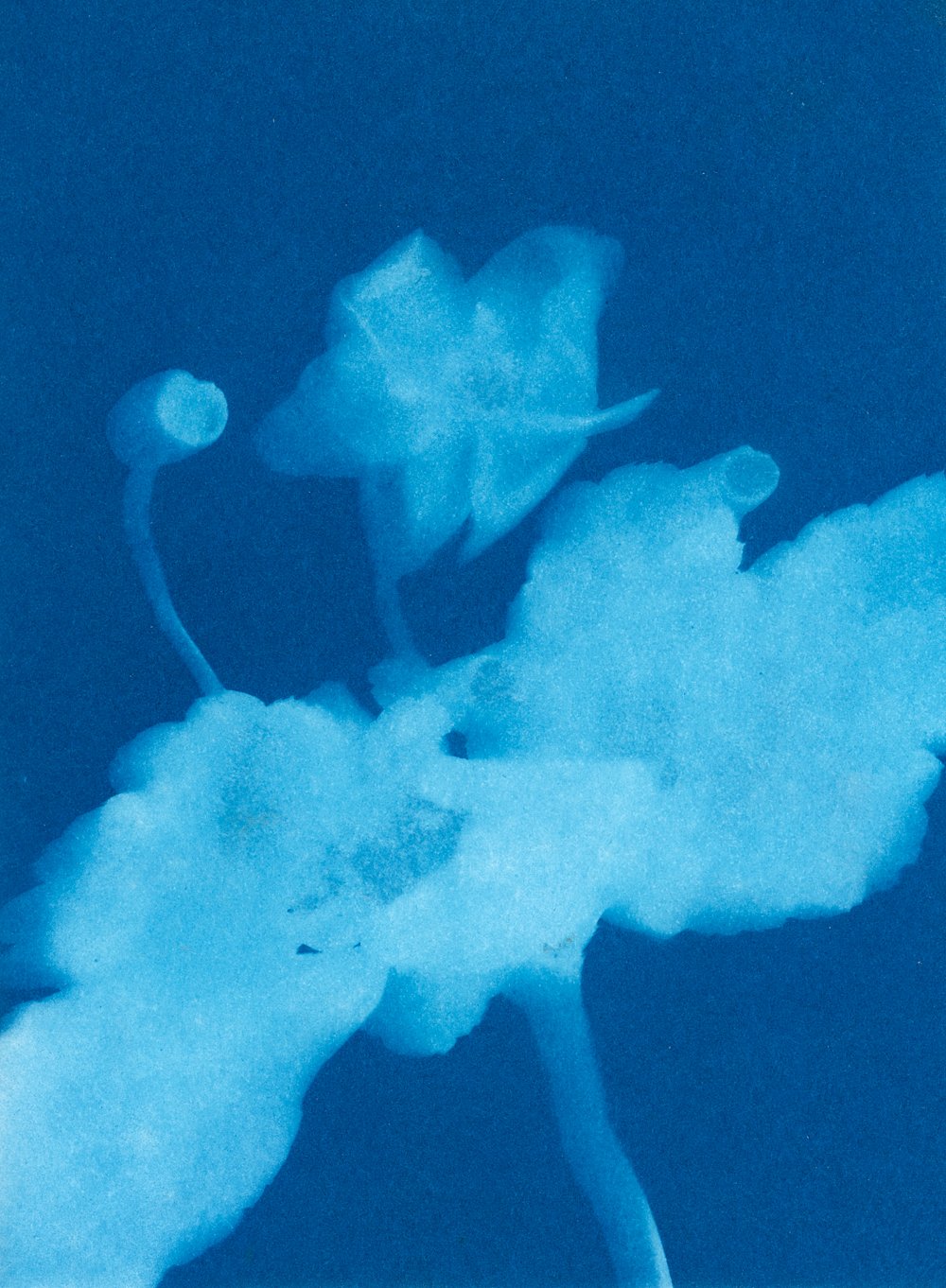
These unique floral images are cyanotypes (iron-blue prints) depicting plants from Tina Trumpp’s own garden. Some motifs were carefully dried, while others were exposed directly to sunlight—a historical photographic process that lends the forms a poetic and timeless quality in deep shades of blue.
Motif dimensions: 18.8 × 13.8 × 0.2 cm
Framed with museum-quality glass and a mat: 34.6 × 27.6 × 3 cm
In the fall of 2024, Tina found two weak young hedgehogs that wouldn’t have survived the winter without help. Luna and Oskar weighed only about 280 grams. With a lot of patience and care, she nursed them back to health until they reached about 900 grams, at which point they were released back into the wild in May—in Tina’s own garden:
While the two hedgehogs were hibernating, Tina transformed her garden into a little natural paradise. The lawn gave way to hardy, native perennials that can withstand even the summer heat. Today, six to eight hedgehogs live there, including Luna and Oskar, who return every evening. At the same time, numerous butterflies have returned, turning this place into a vibrant, diverse habitat.
These images of flowers thus convey not only an aesthetic story, but also a personal one that is closely connected to nature.
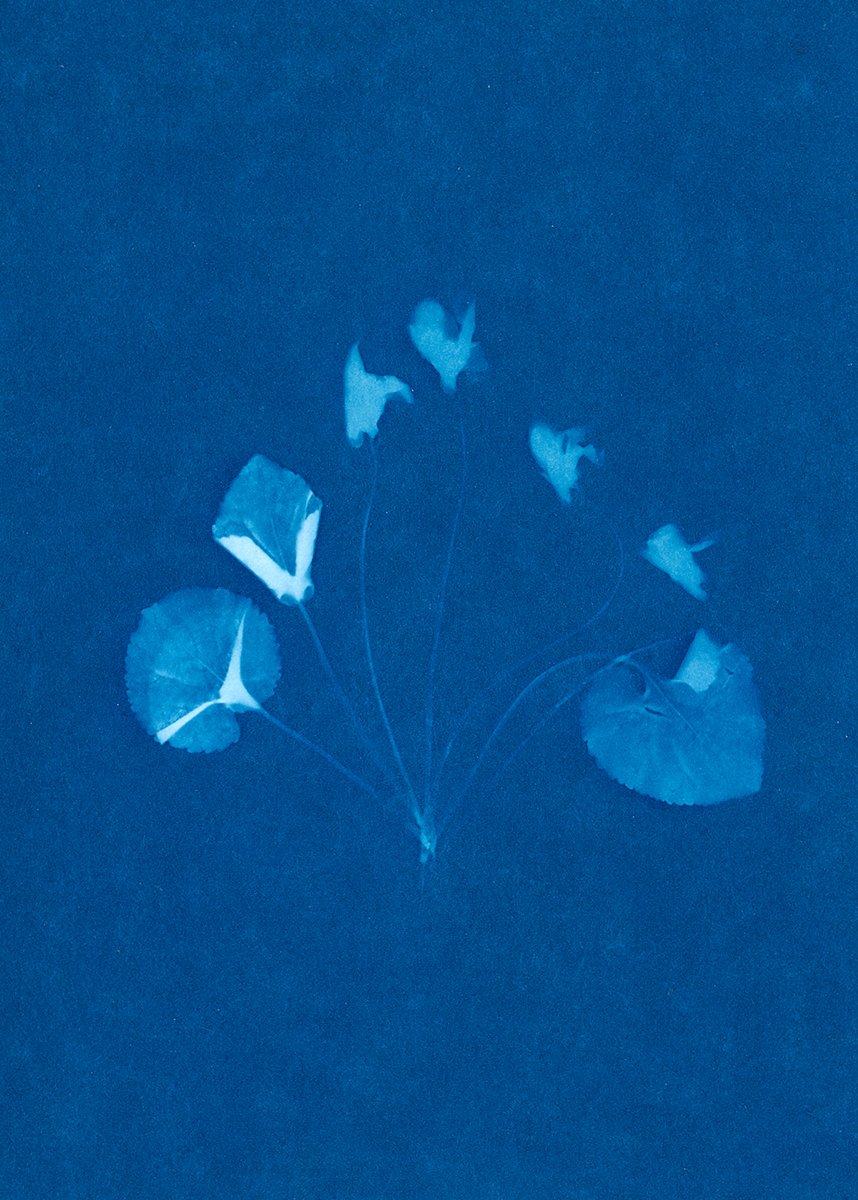
These unique floral images are cyanotypes (iron-blue prints) depicting plants from Tina Trumpp’s own garden. Some motifs were carefully dried, while others were exposed directly to sunlight—a historical photographic process that lends the forms a poetic and timeless quality in deep shades of blue.
Motif dimensions: 18.8 × 13.8 × 0.2 cm
Framed with museum-quality glass and a mat: 34.6 × 27.6 × 3 cm
In the fall of 2024, Tina found two weak young hedgehogs that wouldn’t have survived the winter without help. Luna and Oskar weighed only about 280 grams. With a lot of patience and care, she nursed them back to health until they reached about 900 grams, at which point they were released back into the wild in May—in Tina’s own garden:
While the two hedgehogs were hibernating, Tina transformed her garden into a little natural paradise. The lawn gave way to hardy, native perennials that can withstand even the summer heat. Today, six to eight hedgehogs live there, including Luna and Oskar, who return every evening. At the same time, numerous butterflies have returned, turning this place into a vibrant, diverse habitat.
These images of flowers thus convey not only an aesthetic story, but also a personal one that is closely connected to nature.
When Art and Nature Merge
More and more artists are designing their living and working spaces not only as places of creativity, but also as living ecosystems. Their gardens are far more than just decorative backdrops—they become experimental landscapes where aesthetics, biodiversity, and nature conservation merge.
The Garden as an Artistic Medium
My garden, too, is an extension of my studio. Plants are not placed at random, but arranged like shades of color on a canvas. Shapes, lighting conditions, and seasonal changes play a central role in this process. My garden is strongly reminiscent of Provence. White and purple are the main colors of the heat-tolerant perennials I’ve chosen. These create habitats for bees, butterflies, and other pollinators—and I’ve also come to have many prickly, nocturnal residents: my beloved hedgehogs.
I deliberately chose a design that looks modern but is also environmentally friendly. It was especially important to me to make the garden insect-friendly. I planted native plants that bloom year-round so that bees, butterflies, and other insects can always find food.
I’ve also drawn inspiration from art history. The idea of viewing a garden as a work of art reminds me of artists like Claude Monet, who not only tended his garden in Giverny but also deliberately designed it so that he could later capture it in his famous water lily paintings. This connection between nature and design has had a profound influence on me.
Today, I see my garden as a living work of art. It’s constantly changing: colors shift with the seasons, plants grow, fade away, and return. Nothing is static, and that’s exactly what makes it so special to me.
At the same time, it’s more than just an aesthetic space. It contributes to biodiversity right on my doorstep. Every day, I see insects returning, life unfolding within it, and how a small garden becomes part of a larger ecological context.
For me, this garden today is a form of art that doesn’t end in the studio but continues to live on outdoors—in motion, in light, in the buzzing of insects. I’ve captured all the plant species in my garden as cyanotypes—that is, iron-blue prints. Each individual plant has thus become an image in blue and white—reduced, abstract, and yet entirely concrete. This technique has elevated my garden to a new level: from a real space to an artistic documentation of its own existence.
Yet each image is more than just a botanical illustration. It is an imprint of a very personal, almost intimate space—my garden. A place that, for me, is at once a retreat, a space for creativity, and an experience of nature. By capturing the plants as cyanotypes, I create a kind of visual archive of my everyday life with nature, but also an emotional cartography of what is close to my heart.
The garden itself has long since become my most important artistic space. Yet through the iron-blue prints, it is transformed once again: it breaks free from the transience of the seasons and becomes something enduring, almost timeless. At the same time, it remains fragmentary—each plant stands on its own, each form is a detail of a larger whole.
This creates a dialogue between reality and its image. The garden continues to live outside, constantly changing, growing, and fading away. The cyanotypes, on the other hand, preserve moments of it—as quiet, blue traces of a place that, for me, is far more than just nature: it is my most intimate private space, which has been transformed into art without losing its vitality.