Cyanotypes: One-of-a-kind works created by sunlight
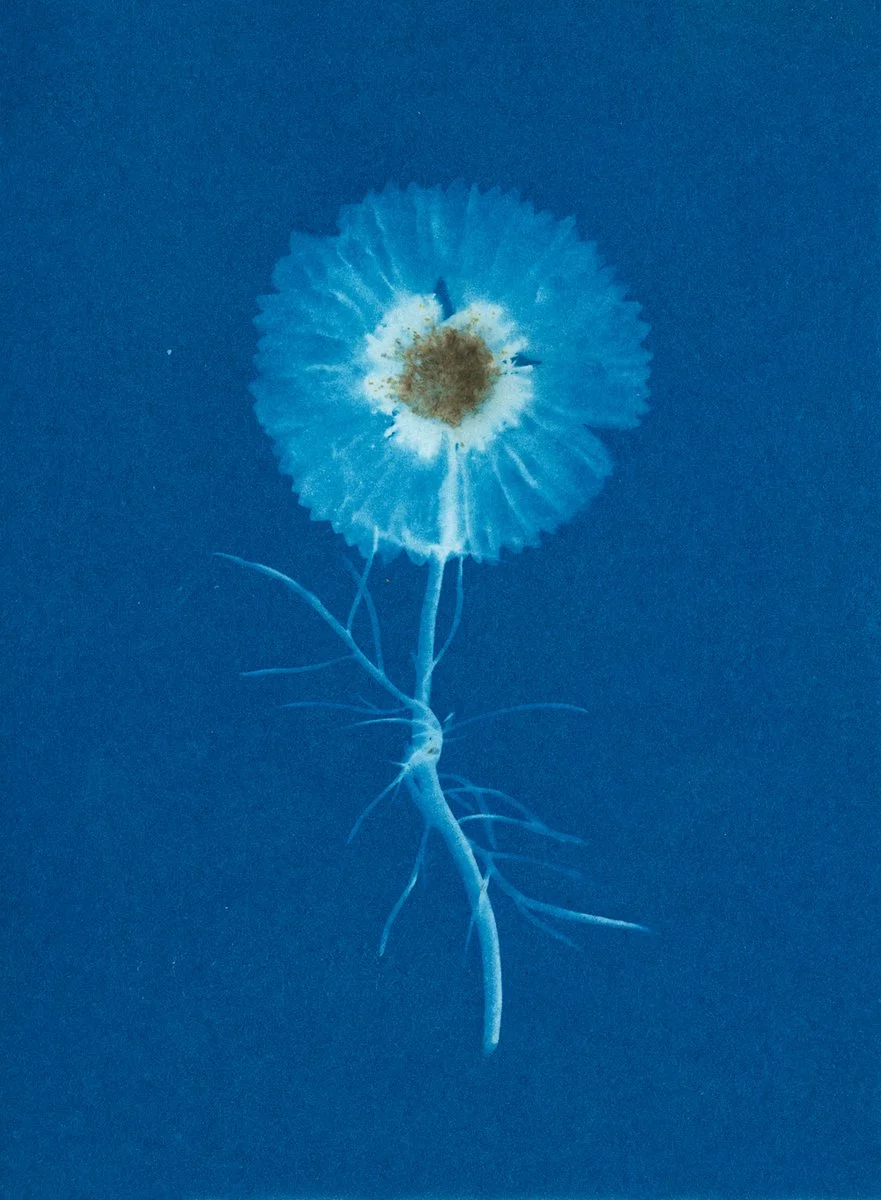
These unique floral images are cyanotypes (iron-blue prints) depicting plants from Tina Trumpp’s own garden. Some motifs were carefully dried, while others were exposed directly to sunlight—a historical photographic process that lends the forms a poetic and timeless quality in deep shades of blue.
Motif dimensions: 18.8 × 13.8 × 0.2 cm
Framed with museum-quality glass and a mat: 34.6 × 27.6 × 3 cm
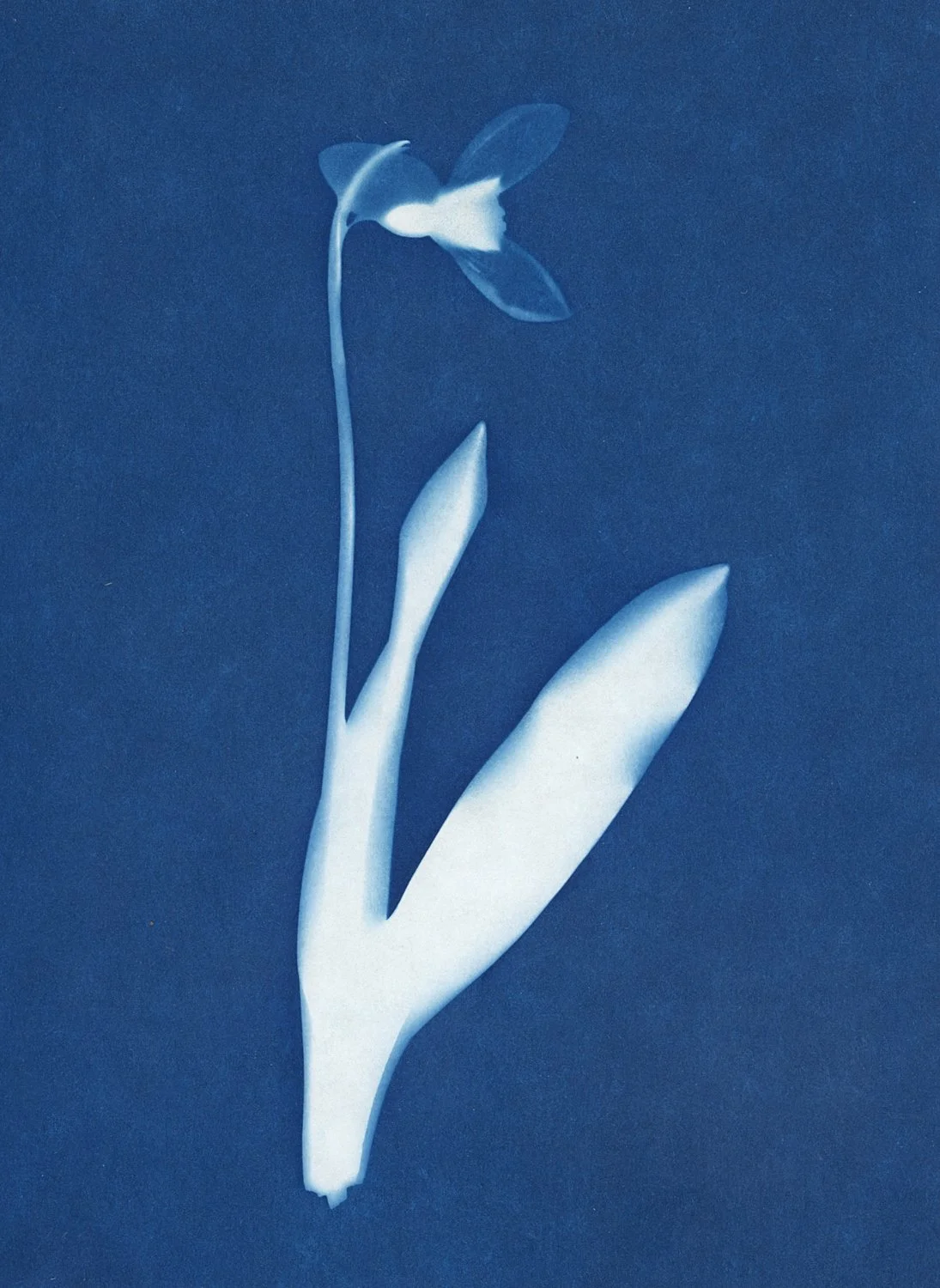
These unique floral images are cyanotypes (iron-blue prints) depicting plants from Tina Trumpp’s own garden. Some motifs were carefully dried, while others were exposed directly to sunlight—a historical photographic process that lends the forms a poetic and timeless quality in deep shades of blue.
Motif dimensions: 18.8 × 13.8 × 0.2 cm
Framed with museum-quality glass and a mat: 34.6 × 27.6 × 3 cm
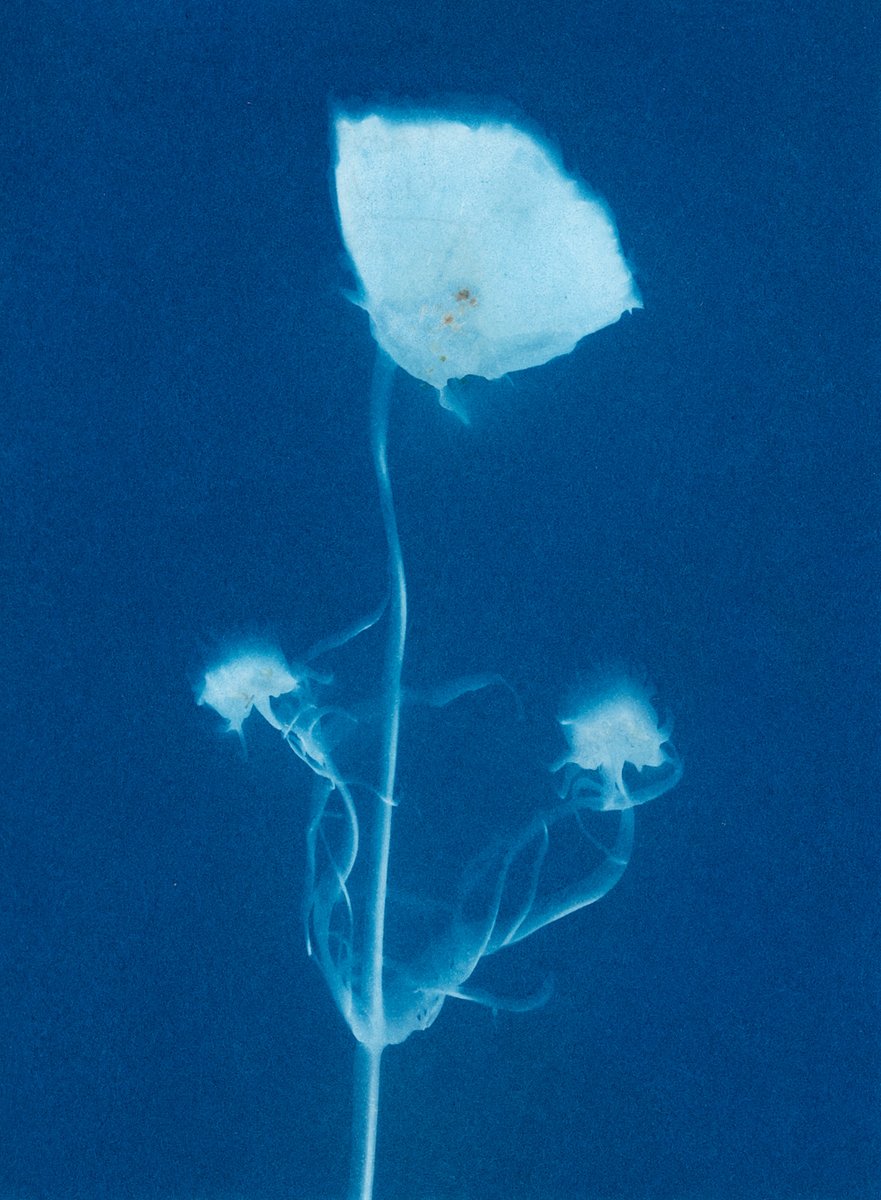
These unique floral images are cyanotypes (iron-blue prints) depicting plants from Tina Trumpp’s own garden. Some motifs were carefully dried, while others were exposed directly to sunlight—a historical photographic process that lends the forms a poetic and timeless quality in deep shades of blue.
Motif dimensions: 18.8 × 13.8 × 0.2 cm
Framed with museum-quality glass and a mat: 34.6 × 27.6 × 3 cm
In the fall of 2024, Tina found two weak young hedgehogs that wouldn’t have survived the winter without help. Luna and Oskar weighed only about 280 grams. With a lot of patience and care, she nursed them back to health until they reached about 900 grams, at which point they were released back into the wild in May—in Tina’s own garden:
While the two hedgehogs were hibernating, Tina transformed her garden into a little natural paradise. The lawn gave way to hardy, native perennials that can withstand even the summer heat. Today, six to eight hedgehogs live there, including Luna and Oskar, who return every evening. At the same time, numerous butterflies have returned, turning this place into a vibrant, diverse habitat.
These images of flowers thus convey not only an aesthetic story, but also a personal one that is closely connected to nature.
Learn more about the historic cyanotype process in this blog post.
At first glance, the cyanotype seems like a relic from the early days of photography—and that is precisely where its special power lies. In a world increasingly shaped by AI-generated images, this process appears as a quiet alternative: slow, physical, dependent on light, and not reproducible at will.
The cyanotype was invented in 1842 by John Herschel. It is one of the oldest photographic techniques and is based on a photochemical reaction of iron compounds that, when exposed to UV light, produce the characteristic deep blue hue—known as Prussian blue. Unlike camera photography, the image is created directly through the action of light on a sensitized surface. The image is not mediated but immediate.
It is precisely this immediacy that stands in contrast to today’s AI-generated imagery. Algorithms generate images from data patterns, calculated and optimized for visual coherence. Cyanotype, on the other hand, defies this logic: it depends on natural conditions such as light intensity, time, and the reaction of the materials. The result remains open-ended, shaped by chance and process.
The work of artist Tina Trumpp precisely captures this contrast. In her cyanotypes, she eschews illustrative or narrative elements and instead focuses on organic structures, particularly plant forms. These do not appear as mere motifs, but as active contributors to the composition of the image. Their delicate branching, transparencies, and densities give structure to the surface and reveal the exposure process.
Trumpp’s works are characterized by a deliberate minimalism: clear compositions, controlled placement of plant forms, and a sensitive awareness of negative space. At the same time, the process remains open to blurring, overlaps, and minimal shifts during exposure. These traces are not flaws, but rather document the temporality of the process—something that is completely absent in AI-generated images.
In the context of today’s visual culture, the cyanotype can therefore be understood as a counter-model. While artificial intelligence can alter and perfect images at will, this process emphasizes uniqueness and physical presence. Here, light leaves behind not a simulation, but a real trace.
The question of authorship is also addressed differently. With AI, it blurs between the dataset, the model, and the user. In cyanotype, it remains tied to the specific act of exposure. Nevertheless, the result cannot be fully controlled—a productive tension between intention and the material’s reaction.
Tina Trumpp umpp’s work Tina Trumpp that a return to historical photographic processes need not be a nostalgic gesture. Rather, it offers a critical perspective on the present: on the acceleration, dematerialization, and apparent perfection of digital images.
In this way, cyanotype becomes more than just a technique. It becomes an artistic approach that focuses on process, presence, and real traces of light—and it is precisely in this that it offers a quiet yet precise response to the visual worlds of AI. All cyanotypes are available for purchase in the online shop.