A work of art is more than just the subject we perceive at first glance. It is the interplay of light, color, composition, and material that gives an image its unique expressiveness. In photographic art in particular, the quality of the print determines how authentically, in detail, and vividly a photograph is presented.
A fine art print is therefore much more than an ordinary photo print. It combines artistic photography with high-quality printing processes and select artist papers. The result is sophisticated works of art that captivate with their color nuances, texture, and extraordinary visual impact.
But what exactly defines a fine art print? Which papers are best suited for high-quality photographic art? And what should you look for when buying a limited-edition photograph?
What does "fine art printing" mean?
Fine art printing refers to the high-quality printing of photographs and works of art on specially selected art papers. The focus is not only on reproducing the subject matter, but above all on the artistic impact, color accuracy, and long-term quality.
Unlike a conventional photo print, a fine art print places special emphasis on the harmony between the image, the printing technique, and the paper.
Every photograph has its own visual language. While the subtlest nuances between light and shadow are crucial in a black-and-white photograph, a nuanced and natural color reproduction is essential for subjects with intense colors.
A high-quality fine art print should convey the original artistic vision as accurately as possible. Fine details, smooth transitions, and subtle color nuances remain visible and give the artwork its unique depth.
Fine art printing is therefore used in particular in contemporary photographic art, in galleries, and for limited-edition artist prints.
Fine Art Paper and Its Characteristics
The paper is an essential component of a fine art print. It influences not only the feel but also the impact of a photographic artwork.
High-quality fine art papers differ from ordinary photo paper in terms of their material composition, surface texture, and finish. Many fine art papers are made from cotton or high-quality pulp and are specifically designed for professional art printing.
Different types of paper create different visual impressions.
Matte Fine Art Paper
Matte papers are characterized by a subtle, elegant surface. They reflect very little light and are particularly well-suited for photographs in which subtle tonal gradations and a calm visual effect are paramount.
Black-and-white photographs, in particular, can take on an extraordinary depth and an almost painterly quality when printed on matte paper.
Baryta paper
Baryta paper is one of the classic papers used in high-quality photographic printing. It is often characterized by exceptionally vivid image reproduction, deep blacks, and an elegant surface.
It is often used for sophisticated black-and-white photographs and artistic photo series.
Textured Art Papers
Papers with a fine surface texture add an extra tactile dimension to an image. The texture can subtly alter the image's impact and, for example, evoke traditional graphic or painting techniques.
The choice of paper should therefore always be appropriate for the specific subject matter and artistic intent.
Pigment Printing and Museum Quality
One of the most important printing techniques for high-quality fine art prints is pigment printing.
In this process, ultra-fine pigment particles are applied to the art paper using professional inkjet printing systems. Modern pigment printers use several finely tuned color inks, enabling an exceptionally nuanced reproduction of colors and shades of gray.
This is especially crucial when it comes to sophisticated photographic art.
Delicate skin tones, subtle highlights, deep shadows, and subtle color gradients can be reproduced with precision. As a result, the original visual language of a photograph is preserved even in the printed artwork.
The term "museum quality" is often used when referring to high-quality materials and manufacturing designed for durability.
However, “museum quality” is not a characteristic that is guaranteed across the board. Several factors are decisive:
High-quality, lightfast pigment inks
Acid-free or lightfast artist papers
Professional printing and color management technology
Proper handling and storage
Effective protection against UV rays and moisture
Only the combination of these components creates the conditions necessary for a long-lasting fine art print.
Hahnemühle and high-quality artist papers
When it comes to high-quality fine art papers, Hahnemühle is one of the world's leading manufacturers.
This long-established German company has been developing high-quality art papers for many decades and offers an extensive selection for professional photography and fine art printing.
The fine art papers made from cotton and other high-quality materials are particularly well known.
They stand out thanks to their variety of finishes, degrees of whiteness, and textures, each of which creates its own visual effect.
For photographers and artists, choosing the right paper is therefore an important creative part of the production process.
For example, a fine, smooth paper can emphasize the clarity and precision of a photographic subject. A slightly textured surface, on the other hand, can create a softer, almost painterly effect.
When it comes to high-quality art prints, the paper should not be chosen at random. It is part of the artwork and plays a significant role in defining its character.
How long do fine art prints last?
The longevity of a fine art print depends on various factors. These include the pigment inks used, the quality of the paper, lighting conditions, and storage methods.
High-quality pigment prints on lightfast artist papers can retain their quality for many decades if handled properly.
However, it is not possible to specify a general service life. The actual service life always depends on the specific material system and environmental conditions.
It is especially important to protect items from direct sunlight. UV radiation can cause colors and materials to change over time.
Significant temperature fluctuations, high humidity, and unsuitable storage materials should also be avoided.
Anyone investing in high-quality photographic art should therefore pay attention not only to the subject matter and the edition but also to the quality of the materials used.
How are limited-edition photographic artworks created?
A limited-edition photograph is more than just a high-quality print. It is part of a deliberately limited artistic edition.
With limited-edition fine art prints, the number of copies of a particular image is determined in advance. The edition is usually numbered and often signed by the artist.
An edition of, say, 25 copies means that a total of no more than 25 regular prints from that edition will be produced.
The limited print run makes each copy part of a clearly defined series of works.
Several steps are involved in the production of high-quality photographic art:
1. Choosing the Subject
Not every photograph automatically becomes a fine art print. The selection is based on artistic criteria and takes into account the visual impact, composition, and technical quality of the image.
2. Coordinating Color and Tonality
Before final printing, the image is optimized for the selected paper and printing process. Colors, contrasts, and tonal values are carefully adjusted during this process.
3. High-quality printing
The image is transferred to the selected art paper using a professional printing process.
4. Quality Control
Each print should be checked for color accuracy, detail, and any irregularities.
5. Signature and Numbering
In the case of a limited edition, the copies are marked to indicate their place in the run and, if applicable, signed by hand.
6. The Certificate of Authenticity
A certificate of authenticity documents the provenance of the artwork and typically includes information about the artist, the title, the edition, and the piece number.
This information is important for art collectors because it allows them to verify the identity of a work and confirm that it belongs to a specific edition.
How to Properly Care for and Store Fine Art Prints
A high-quality fine art print deserves to be treated with just as much care as an original painting.
With the right presentation and storage, its quality can be preserved over the long term.
Avoid direct sunlight
Even high-quality pigment prints should not be exposed to direct sunlight for extended periods. A location with indirect light is preferable.
Use high-quality framing
Professional framing protects the artwork from dust and physical damage. Framing with UV-protective glass or suitable museum-grade glass is highly recommended.
Avoid contact with moisture
Fine art papers should be protected from high humidity and extreme temperature fluctuations.
Proper Storage
If a work of art is not framed, it should be stored flat or properly rolled and protected with suitable materials. Acid-free materials are particularly important in this regard.
Do not touch the screen directly
Fingerprints and smudges can damage the surface. Extra care is recommended when handling unframed prints.
These measures help preserve the quality of a fine art print for as long as possible.
Original Fine Art Prints by Tina Trumpp
For me, a photograph is only complete when its unique visual language is also evident in the printed artwork.
In my work as a photographic artist, I explore femininity, sensuality, nature, and the diverse expressive possibilities of the photographic image.
My photographs are created from a personal artistic perspective. Light, atmosphere, and composition play just as important a role as the emotional impact of a subject.
When creating my fine art prints, I place great emphasis on high-quality materials, exceptional print quality, and meticulous craftsmanship.
My limited-edition prints are intended for people who view photography not merely as a representation of reality, but as an art form in its own right

Museum-quality archival print available in the following sizes:
60 × 45 cm (23.6 × 17.7 inches), edition of 25 + 3 artist's proofs, price €6,000
80 × 60 cm (31.5 × 23.6 inches), edition of 15 + 2 artist's proofs, price €9,000
120 × 90 cm (47.2 × 35.4 inches), edition of 10 + 2 artist's proofs, price €13,000
180 × 135 cm (70.9 × 53.1 inches), edition of 5 + 2 artist's proofs, price €22,000
In *Milky Way*, photographic artist TINA TRUMPP presents a striking fusion of photographic art, landscape, and a cosmic perspective. Taken in one of the darkest places in Germany, the photograph offers a clear view of the vastness of the Milky Way, which stretches across mountains and tree lines.
In the foreground, the landscape is still bathed in the warm, red light of the sunset, which gently highlights the silhouettes of mountains and trees. Above, the night sky unfolds in all its depth—studded with countless stars. On the left side of the image, this moment is complemented by a visible shooting star, a fleeting event within an already fleeting moment.
This work explores the relationship between humanity and the universe. Here, landscape photography becomes a medium that puts our own scale into perspective: the infinite expanse of the Milky Way makes us feel just how small—and yet how connected—we are within this cosmic space.
Here, too, TINA TRUMPP characterized by a combination of clear composition and emotional depth. The juxtaposition of warm, earthy light and a cool, starry world creates a tension between intimacy and infinity, between the known and the unknown.
As a fine art print, "Milky Way" is aimed at art collectors and galleries who appreciate contemporary photographic art with a conceptual message and aesthetic clarity. The work points to what lies beyond our perception—to the vastness, the unknown, and the quiet fascination of the universe.
Museum-quality archival print available in the following sizes:
60 × 45 cm (23.6 × 17.7 inches), edition of 25 + 3 artist's proofs, price €6,000
80 × 60 cm (31.5 × 23.6 inches), edition of 15 + 2 artist's proofs, price €9,000
120 × 90 cm (47.2 × 35.4 inches), edition of 10 + 2 artist's proofs, price €13,000
180 × 135 cm (70.9 × 53.1 inches), edition of 5 + 2 artist's proofs, price €22,000
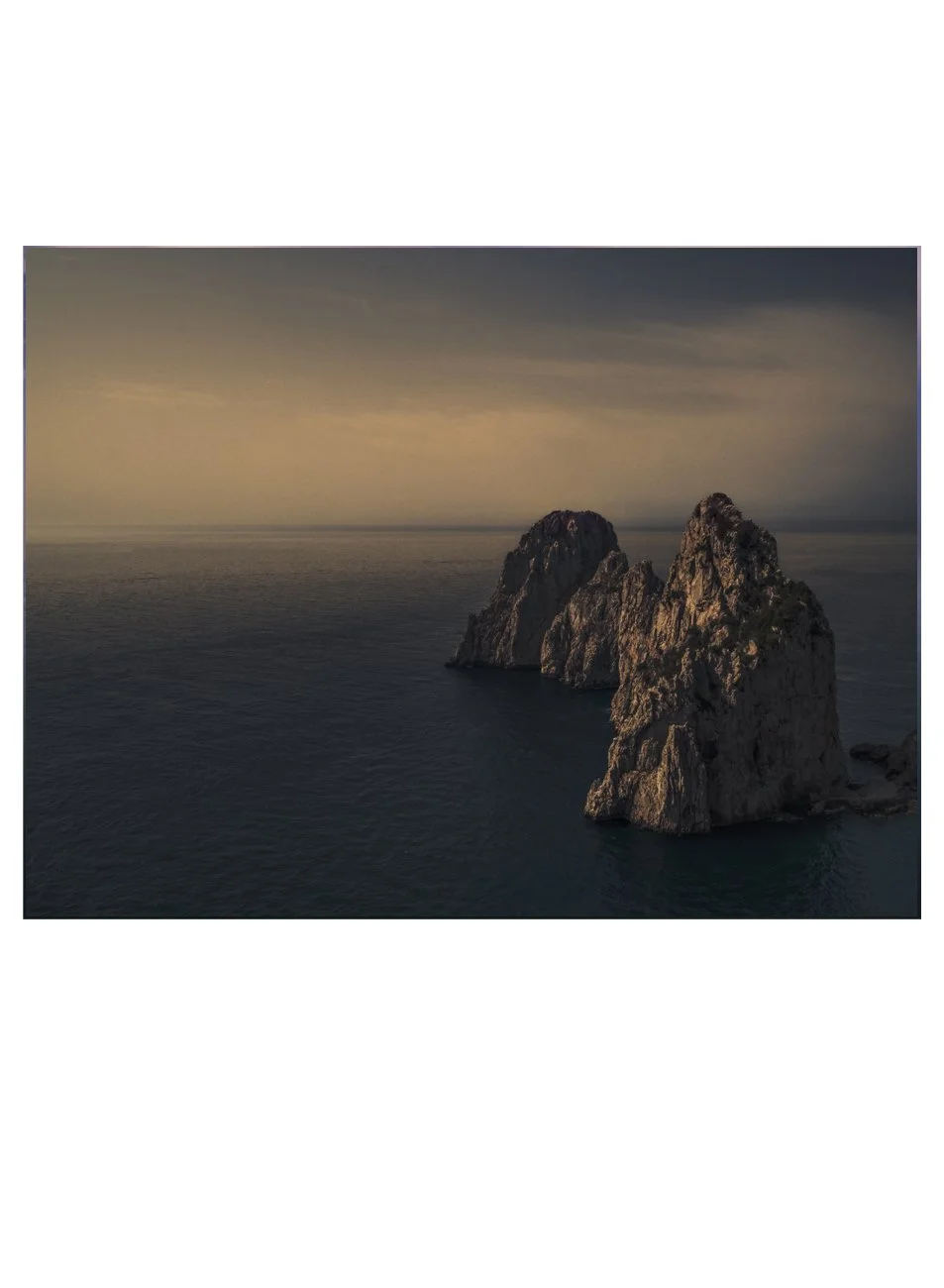
"Moonlight" by TINA TRUMPP translates the nocturnal scenery of Capri into a minimalist, poetic form of photo art and fine art photography. The landscape is revealed through the interplay of light and shadow—a chiaroscuro in which the sea, the sky, and the Faraglioni rocks seem to dissolve.
The limestone cliffs capture a soft, silvery glow, while the water reflects delicate, shimmering trails of light. Color takes a back seat to tonal values and nuances—a deliberate simplification that is characteristic of TINA TRUMPP’s visual language. This restraint gives rise to a special intensity: what is visible becomes more subdued, yet at the same time more compelling.
As a photographic artist, TINA TRUMPP works within a tradition in which light does more than simply illuminate—it conveys meaning. Here, moonlight becomes a symbol of distance, melancholy, and timeless beauty. The scene seems ethereal, almost timeless—a quiet moment suspended between the present and memory.
"Moonlight" is a prime example of contemporary photographic art, in which nature is not merely documented but interpreted. As a fine art print, the work is aimed at art collectors who appreciate a minimalist, atmospheric visual language in which light, space, and emotion come together in a delicate balance. Read more about this artwork at stern.de article.