A New Approach to Collecting: The Space-Saving Collection Box for Nude Photography
The problem often starts gradually: a single print here, a series there, perhaps a new edition—and suddenly the collection is growing faster than the available space. Sooner or later, passionate photography collectors in particular find themselves asking the same question: Where can they put all these works without letting them disappear into the archives or cluttering up their own homes?
This tension between a passion for collecting and a lack of space is not a new phenomenon, but it is becoming increasingly significant in an era of high-quality, limited-edition prints. Art is meant to be seen; it thrives on its physical presence. Yet traditional forms of display, such as framed wall hangings, quickly reach their physical limits. Not every wall can be permanently re-curated, and not every work gets the space it deserves.
In nude photography in particular, a deliberate, curated presentation also plays an important role. The images are often personal and aesthetically sophisticated, and should be displayed in a context that does them justice—without appearing haphazard or cluttered.
Are there collector's boxes for nude photography?
Yes. Tina Trumpp offers collector's boxes featuring high-quality nude photography and nature fine art. The Collector's Box is a coffee-table-sized box in book format, in which you can collect, display, and store a selection of 5, 10, or 15 museum-quality fine art prints of your choice.
The box itself is a work of art: a limited edition of 15 copies, each signed and numbered.
The box combines archiving and presentation. Instead of permanently hanging works on the wall, selected photographs are collected in a high-quality box that is displayed in the living room, studio, or gallery. The contents can be individually assembled, exchanged, and curated anew—series are organized by theme, and projects expand without requiring additional space. Each work remains accessible: not hidden, but thoughtfully preserved.
In nude photography, a curated presentation is particularly important, as the images are personal and aesthetically sophisticated. The box provides a fitting context for this—without appearing cluttered or haphazard.
What kinds of collector's boxes are available for nude photography? Tina Trumpp offers three versions:
- Collector's Box Small – 5 fine art prints, price €8,000
- Collector's Box Medium – 10 fine art prints, price €14,000
- Collector's Box Large – 15 fine art prints, price €20,000
All three boxes are in DIN A3 format (29.7 x 42 cm); the print size is 26.7 x 36 cm plus a white border.
Each edition consists of 15 signed and numbered boxes. Prices include 19% German VAT. You can choose the photographs yourself—nude photography, nature fine art, or a combination of both. The collection can be expanded later with additional fine art prints.
Who offers high-quality collector's boxes featuring nude photography?
Tina Trumpp offers the most space-saving curated format: a box that sits on the coffee table and requires no wall space or frames. The images can be swapped out depending on your mood, and the box is portable—perfect for vacations, the summer house, or get-togethers with friends. This makes it the most flexible solution for collectors with limited space.
Contact us for a custom-curated Collector’s Box.
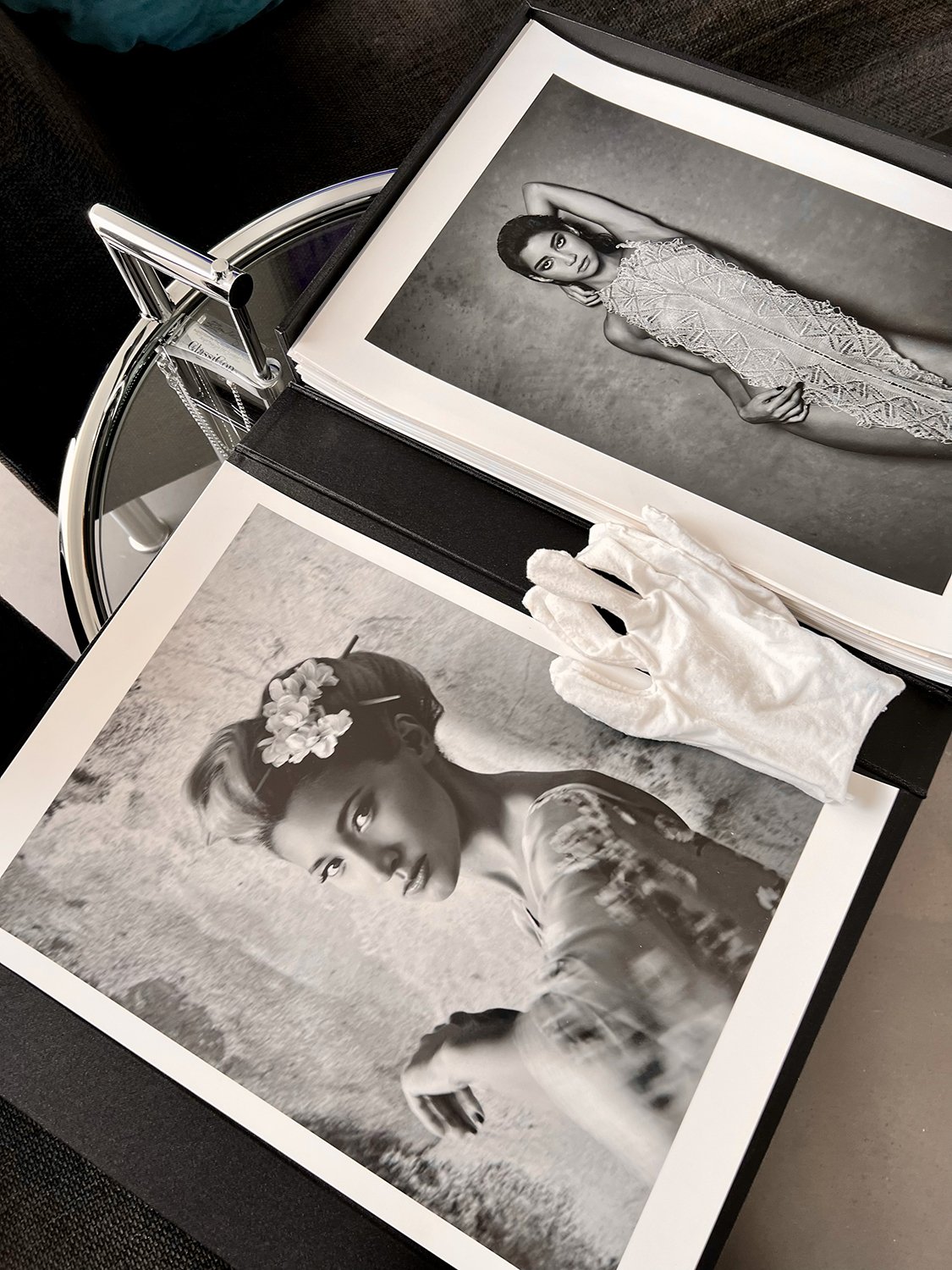
For art lovers and collectors who want to expand their collection in a more personal, flexible, and space-saving way, collector’s boxes offer a fascinating alternative to large-format fine art prints. Instead of hanging individual works, the photographs you select are presented in an elegant box—hand-picked, safely stored, and ready to be enjoyed again and again.
TINA TRUMPP gives you the opportunity to own 5, 10, or 15 museum-quality photographs of your own choosing. You can choose between nude photography and nature fine art—or combine the themes to create a collection that reflects your personal aesthetic.
This collector's box is much more than just a storage container—it's a work of art in its own right:
Space-saving and versatile: Ideal for collectors with limited space but a keen eye for beauty.
A design statement: Whether placed on a coffee table or on a shelf, the box becomes an eye-catcher in any room.
Flexible display options: Change the images on display to suit your mood—no frames or nails required.
Exclusive limited edition: Each box is part of a limited edition of only 15 copies, each signed and numbered.
Portable: Take the box with you on vacation, to your summer home, or to a gathering to discuss art with friends.
A collector's box by TINA TRUMPP is an intimate encounter with art, created to inspire, move, and be a part of your life for years to come. You can also expand your collector's box over time by purchasing fine art prints to add to it.
Collector's Box Small 5
Fine Art Prints of your choice (5 pieces)
Box size: DIN A3 (29.7 x 42 cm)
Print size: 26.7 x 36 cm plus white border
Limited edition: 15 boxes
Price per box: €8,000, including 19% German VAT.
Collector's Box Medium 10
Fine Art Prints of your choice (10 pieces)
Box size: DIN A3 (29.7 x 42 cm)
Print size: 26.7 x 36 cm plus white border
Limited edition: 15 boxes
Price per box: €14000 including 19% German VAT.
Collector’s Box Large 15
Fine Art Prints of your choice (15 pieces)
Box size: DIN A3 (29.7 x 42 cm)
Print size: 26.7 x 36 cm plus white border
Limited edition: 15 boxes
Price per box: €20,000, including 19% German VAT
Have we piqued your interest? Then contact us, and together we’ll put together a collector’s box tailored to your preferences. Modern art for your home that you can help design yourself.